Visual Communication in Real Estate: Complete Guide


People remember up to 80% of what they see, compared to just 20% of what they read. In real estate, first impressions shape decisions faster than ever. With buyers scrolling countless listings each day, eye-catching visuals can mean the difference between a sold home and a missed opportunity. Knowing what makes visual communication so powerful in real estate helps agents stand out, attract more interest, and create deeper connections with potential buyers.
Key Takeaways
Point | Details |
Importance of Visual Communication | High-quality visual content is essential for engaging potential buyers and effectively marketing properties in a competitive landscape. |
Diverse Visual Formats | Utilizing various formats like video walkthroughs and 3D tours enhances property storytelling and increases buyer engagement. |
Strategic Approach is Key | Successful visual content requires high resolution, emotional storytelling, and ethical practices to ensure integrity and brand consistency. |
Risks of Misrepresentation | Real estate professionals must navigate legal and ethical challenges to avoid misleading visuals that could erode buyer trust and result in liability. |
Table of Contents
What Visual Communication Means In Real Estate
Visual communication in real estate transforms complex property information into compelling, easy-to-understand visual narratives that engage potential buyers and clients. According to research from the European property marketing sector, high-quality visual content is no longer optional—it’s a fundamental requirement for successful property marketing.
At its core, visual communication involves strategically using images, videos, infographics, and digital media to showcase properties, convey their unique characteristics, and create emotional connections with potential buyers. Understanding the Importance of Visual Storytelling reveals that effective visuals do more than just display a property—they tell its story, highlighting architectural details, neighborhood context, and potential lifestyle opportunities.
In today’s digital marketplace, visual communication serves multiple critical functions for real estate professionals:
Capturing potential buyers’ attention within seconds
Providing immersive property experiences through virtual tours
Demonstrating property value beyond basic listing details
Creating memorable brand impressions that differentiate agents
Research from a 2024 panel in Warsaw emphasized that customer expectations have dramatically evolved, with buyers now demanding expert, engaging visual content that goes beyond traditional photography. Modern real estate visual communication is about creating an emotional journey that transforms static property listings into dynamic, storytelling experiences.
Key Visual Formats And Their Functions
Contemporary real estate visual communication has evolved far beyond traditional photography, offering diverse formats that transform how properties are marketed and experienced. According to research from Flatworld Solutions, modern buyers now expect immersive content that goes well beyond static images.
The key visual formats in real estate each serve distinct communicative purposes:
Here’s how the main real estate visual formats compare:
Visual Format | Primary Function | Key Benefit | Engagement Impact |
Photographs | Showcase property basics | Quick viewer attention | Standard baseline |
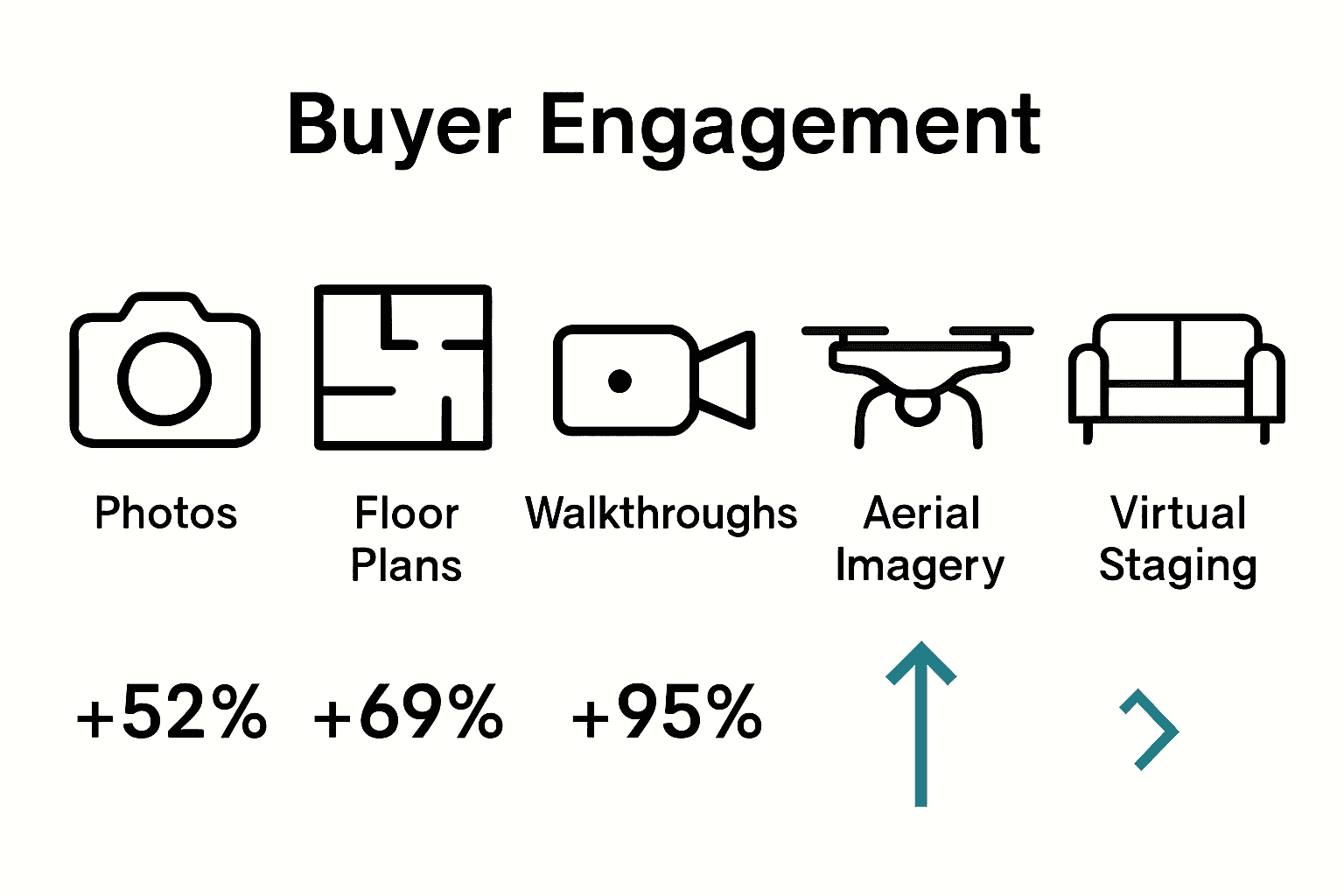
Floor Plans | Show structure/layout | Clarifies spatial flow | 66% consider vital |
Video Walkthroughs | Tell property story | Builds emotional connection | Moderately increases time spent |
3D/360° Tours | Interactive exploration | Full-immersion experience | High engagement, boosts interest |
Drone Imagery | Aerial/expansive views | Displays location context | 68% higher engagement |
Virtual Staging | Digital furnishing | Reduces staging costs | Maintains buyer interest |
Photographs: High-resolution images showcasing property exteriors and interiors
Floor Plans: Providing structural context, rated very important by 66% of buyers
Video Walkthroughs: Creating dynamic, narrative-driven property experiences
3D/360° Virtual Tours: Allowing comprehensive, interactive property exploration
Drone Imagery: Capturing expansive property and neighborhood perspectives

Interestingly, 7 Essential Visual Storytelling Strategies for Brands highlights how each visual format can dramatically enhance engagement. Research indicates drone photography delivers around 68% higher engagement, while virtual staging reduces traditional staging costs while maintaining buyer interest. Interactive infographics can improve property feature understanding by approximately 55%, demonstrating how strategic visual communication goes beyond mere representation to create compelling narratives that help potential buyers envision themselves in a space.
Tools And Technologies For Visual Messaging
Visual messaging technologies are rapidly transforming real estate marketing, offering professionals sophisticated tools to create compelling property narratives. According to industry research, AI-powered platforms are revolutionizing how real estate professionals develop and distribute visual content across multiple channels.
The current technological landscape for visual messaging includes several key tools and platforms:
Professional Camera Equipment: High-resolution digital cameras and stabilization gear
Drone Technology: Advanced aerial imaging systems for expansive property views
Virtual Tour Platforms: Interactive 360-degree property exploration software
AI Editing Tools: Intelligent image and video enhancement applications
Cloud Storage Solutions: Secure digital asset management systems
What is Audiovisual Storytelling? Understanding Its Impact reveals how these technologies are not just tools, but storytelling instruments. The industry is witnessing growing investment in platforms that seamlessly integrate various media types—videos, photographs, virtual tours—into streamlined marketing workflows, enabling real estate professionals to create more immersive, engaging visual experiences with unprecedented efficiency and creativity.
Practical Requirements And Best Practices
Visual communication in real estate demands a strategic approach that balances aesthetic appeal with professional integrity. According to research from the European real estate marketing sector, successful visual content goes far beyond simple photography—it requires careful planning, technical skill, and ethical considerations.
Key best practices for creating compelling real estate visual content include:
High-Resolution Quality: Ensuring crisp, professionally shot images
Emotional Storytelling: Creating visuals that connect with potential buyers
Brand Consistency: Maintaining a uniform visual style across all marketing materials
Ethical Representation: Transparently showcasing property features
Rapid Turnaround: Delivering polished visuals quickly to maintain market momentum
Understanding Why Visual Branding Matters for Success emphasizes the critical nature of these practices. Research from Flatworld Solutions highlights the importance of clear disclosure, particularly with techniques like virtual staging. Professionals must balance visual enhancements with absolute honesty—editing should make properties look their best without misrepresenting their actual condition. The goal is to build trust while creating visually engaging content that accelerates buyer interest and facilitates faster, more effective property transactions.
Risks, Limitations, And Legal Considerations
Visual communication in real estate is a powerful tool, but it comes with significant risks and ethical challenges that professionals must carefully navigate. According to research from Flatworld Solutions, the line between strategic presentation and misrepresentation can be razor-thin, demanding extreme diligence and transparency from real estate marketing teams.
Key risks and legal considerations include:
Misrepresentation Liability: Potential legal consequences for misleading property presentations
Ethical Editing Boundaries: Maintaining honest visual representations
Digital Manipulation Risks: Avoiding alterations that could be deemed fraudulent
Disclosure Requirements: Clearly labeling enhanced or virtually staged images
Potential Buyer Trust Erosion: Managing visual expectations versus reality
Complete Guide to the Role of Visuals in Advertising underscores the critical importance of maintaining integrity in visual communication. Research from a Central European property forum highlights that overinvesting in visual formats without strategic messaging can lead to client confusion and potential legal complications. Professionals must strike a delicate balance—creating compelling visuals that accurately represent properties while avoiding any suggestion of intentional deception. The ultimate goal is to provide transparent, informative visual content that builds trust and facilitates genuine connections between properties and potential buyers.
Elevate Your Property Listings With Visual Storytelling That Delivers Results
If you are relying on traditional photography or static listings, you could be missing out on genuine buyer interest. This article uncovers why today’s real estate market demands engaging visual communication and highlights the risks of poor-quality visuals, misrepresentation, or slow turnaround. Your next step is to make sure your properties are showcased with a blend of emotional storytelling, advanced visuals, and the rapid delivery modern buyers expect.

Don’t let your listings get lost in a crowded market. Discover how Tulip Films creates stunning real estate videos and immersive virtual tours that capture attention fast. Our professional approach blends creativity with technical precision so your properties stand out and your clients can trust what they see. Visit Tulip Films now for a free consultation and find out how you can transform visual communication into real estate success today.
Frequently Asked Questions
What is visual communication in real estate?
Visual communication in real estate refers to the use of images, videos, infographics, and digital media to present property information in an engaging way, helping potential buyers understand and connect with the properties being offered.
Why is visual content important for real estate marketing?
High-quality visual content is crucial in real estate marketing because it captivates potential buyers quickly, provides immersive experiences through virtual tours, and helps convey property value beyond basic listing details, ultimately facilitating faster transactions.
What are the most effective visual formats for real estate listings?
The most effective visual formats for real estate listings include photographs, floor plans, video walkthroughs, 3D/360° tours, drone imagery, and virtual staging. Each format serves unique purposes and contributes to enhancing buyer engagement and understanding of properties.
What best practices should be followed when creating visual content for real estate?
Best practices for creating visual content in real estate include ensuring high-resolution quality, employing emotional storytelling techniques, maintaining brand consistency, ethically representing property features, and delivering visuals quickly to keep up with market demands.
Recommended
