How to Optimize Video Marketing for Business Success


Video marketing is everywhere and yet most brands miss their mark. Over 90 percent of marketers say video helps increase user understanding of their product. Yet most campaigns fall flat or get lost online. The real secret? Success is not just about making pretty videos, but about mastering five key steps that most companies skip.
Table of Contents
Quick Summary
Key Point | Explanation |
1. Define audience with comprehensive profiles | Create detailed audience personas based on demographics, interests, and pain points for effective targeting. |
2. Set clear, measurable video goals | Apply the SMART framework to create specific and time-bound objectives aligned with your business strategy. |
3. Prioritize high-quality video production | Balance technical quality with storytelling; aim for engaging narratives that communicate your core message authentically. |
4. Optimize videos for search visibility | Use keyword strategies and platform-specific techniques to enhance discoverability and engage viewers effectively. |
5. Analyze performance and iteratively refine | Establish metrics for evaluation; adapt strategies based on audience feedback and quantitative data for continuous improvement. |
Step 1: Define Your Target Audience and Goals
Successful video marketing starts with crystal clear understanding of who you are speaking to and what you want to achieve. This foundational step determines the entire trajectory of your video content strategy, influencing everything from messaging to visual design.
Defining your target audience requires more than basic demographic information. You need a comprehensive profile that goes beyond age and location. Consider creating a detailed audience persona that captures psychological characteristics, professional challenges, aspirations, and media consumption habits. For instance, if you are targeting small business owners in the technology sector, understand their specific pain points, preferred communication channels, and the type of content that resonates with their professional goals.
To develop an accurate audience profile, start by analyzing your existing customer data. Review customer relationship management (CRM) records, website analytics, and social media insights. Look for patterns in engagement, purchasing behavior, and interaction with previous marketing materials. Key questions to explore include: What content generates the most engagement? What problems do your current customers need solved? Where do they spend their online time?
Parallel to audience identification, establish clear and measurable video marketing goals. These objectives should align directly with broader business strategies. Common video marketing goals might include brand awareness, lead generation, product education, or customer retention. Each goal requires a different approach and metrics for success.
When setting goals, apply the SMART framework:
Specific: Clearly defined objective
Measurable: Quantifiable outcomes
Achievable: Realistic within your resources
Relevant: Aligned with business strategy
Time-bound: Clear deadline for achievement
For example, a SMART goal might be: “Increase product demonstration video views by 40% within six months, targeting technology professionals in the B2B sector.” This goal is specific, measurable, achievable, relevant to business growth, and has a clear timeline.
Remember that audience definition and goal setting are iterative processes. Regularly review and refine your understanding as market dynamics shift and your business evolves. By investing time in this initial step, you create a robust foundation for a video marketing strategy that speaks directly to your audience and drives meaningful business results.
Step 2: Create High-Quality, Engaging Video Content
Transforming your strategic audience insights into compelling video content requires a thoughtful approach that balances technical quality with storytelling prowess. The goal is not just to produce a video, but to craft a visual narrative that connects emotionally and intellectually with your target audience.
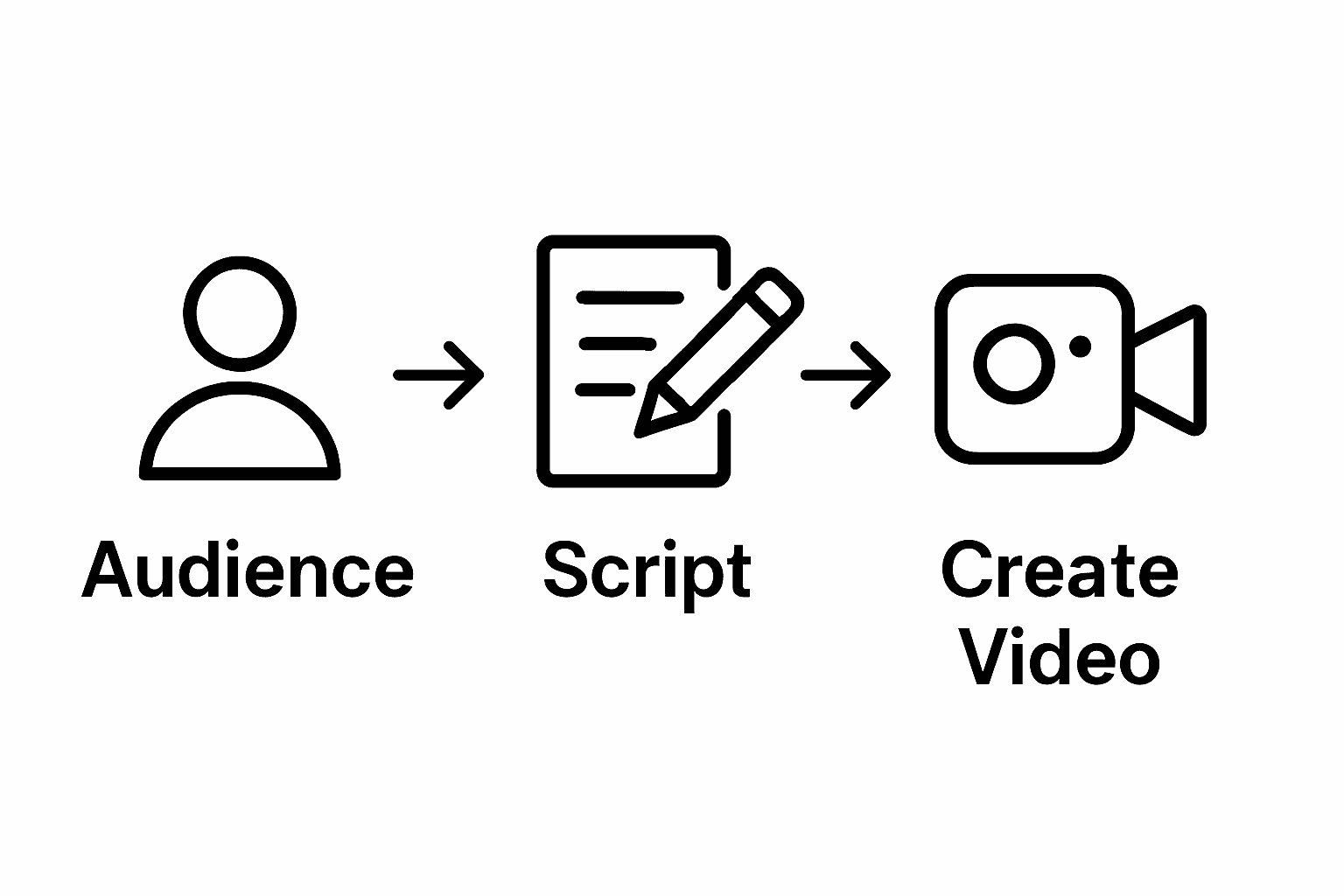
Video production begins with meticulous planning. Start by developing a comprehensive script that clearly communicates your core message while maintaining an authentic and conversational tone. Consider the narrative arc carefully: introduce a problem your audience recognizes, present your solution, and conclude with a clear call to action. Authenticity matters more than perfection. Viewers appreciate genuine storytelling that feels natural and relatable.
Technical quality cannot be overlooked. Invest in professional equipment or work with experienced videographers who understand lighting, sound, and composition. While smartphone cameras have improved dramatically, professional video production ensures superior visual and audio quality. Learn more about producing high quality business videos to understand the nuanced elements that elevate your content.
Content style should directly reflect your audience persona. A corporate training video requires a different approach compared to a startup product launch video. Professional services might benefit from clean, structured presentations, while creative industries could experiment with more dynamic and innovative storytelling techniques. The key is understanding your audience’s preferences and communicating in a language they find engaging.
Consider incorporating storytelling techniques that drive emotional connection. Human stories trump technical demonstrations. Instead of listing product features, show how your solution transforms a customer’s life or solves a critical business challenge. Use real testimonials, demonstrate practical applications, and create scenarios that allow viewers to imagine themselves benefiting from your offering.
Technical considerations extend beyond equipment. Pay attention to video length, pacing, and structure. Attention spans are short, so aim to communicate your core message within the first 15 seconds. For most marketing videos, the ideal length ranges between 60 to 90 seconds. Longer formats should only be used when the content genuinely warrants extended exploration.
Final verification involves multiple review stages. Share drafts with team members, conduct small focus group screenings, and be open to constructive feedback. Successful video content is not created in isolation but through collaborative refinement. Your goal is a video that not only looks professional but feels genuine and compelling to your target audience.
Step 3: Optimize Videos for Search Engines and Platforms
Optimizing your video content for search engines and digital platforms transforms your marketing strategy from passive broadcasting to strategic visibility. This crucial step ensures your carefully crafted videos actually reach your intended audience by improving discoverability and engagement across multiple channels.
Keyword research forms the foundation of video optimization. Treat your video metadata with the same strategic approach you would apply to written content. Develop a comprehensive keyword strategy that includes researching terms your target audience actually uses when searching for content related to your offering. Integrate these keywords naturally into your video title, description, and tags. Avoid keyword stuffing - instead, focus on creating descriptive, compelling text that accurately represents your video’s content while incorporating relevant search terms.
Explore our essential video marketing tips to understand how strategic optimization can dramatically improve your content’s reach. Platform-specific optimization requires nuanced understanding of each channel’s unique algorithm and audience behavior. YouTube, for instance, heavily weights watch time and engagement metrics, while LinkedIn prioritizes professional content with clear business value.
Technical optimization extends beyond text. Create custom thumbnails that are visually compelling and accurately represent your video’s content. These small images serve as the first point of visual engagement and can significantly impact click through rates. Ensure thumbnails are high resolution, feature clear imagery, and include minimal text that communicates the video’s core value proposition.
Transcriptions and closed captions dramatically improve accessibility and search optimization. These text overlays not only make your content more inclusive for viewers with hearing impairments but also provide additional keyword context for search algorithms. Many platforms automatically generate captions, but investing time in editing and refining these transcriptions ensures accuracy and improves overall content quality.
Platform-specific strategies require understanding each channel’s unique requirements. Vertical videos perform better on mobile platforms like Instagram and TikTok, while YouTube and LinkedIn favor traditional horizontal formats. Adapt your content’s aspect ratio and length to match each platform’s preferred specifications. Consider creating platform-specific cuts of your primary video to maximize engagement across different channels.
Verification of optimization success involves monitoring key performance metrics. Track views, watch time, engagement rates, and audience retention. Look for patterns in how viewers interact with your content across different platforms. Be prepared to iterate and refine your approach based on these insights, recognizing that video optimization is an ongoing process of continuous improvement and adaptation.
The following table provides a quick reference checklist for optimizing your videos based on the key optimization actions described in the article.
Optimization Task | Purpose | Key Tip |
Conduct keyword research | Improve search discoverability | Use terms your target audience is actually searching |
Optimize titles and descriptions | Enhance click-through and context | Naturally integrate target keywords |
Add tags and metadata | Refine search targeting and categorization | Avoid irrelevant or excessive tagging |
Design compelling thumbnails | Increase viewer engagement | Use clear, eye-catching visuals with minimal text |
Add closed captions/transcripts | Boost accessibility & SEO | Edit auto-generated captions for accuracy |
Format videos for each platform | Match user experience and preferences | Adjust aspect ratio (vertical for mobile, horizontal for desktop) |
Monitor platform-specific metrics | Assess and refine video strategy | Focus on watch time, retention, and engagement rates |
Step 4: Promote Videos Across Multiple Channels
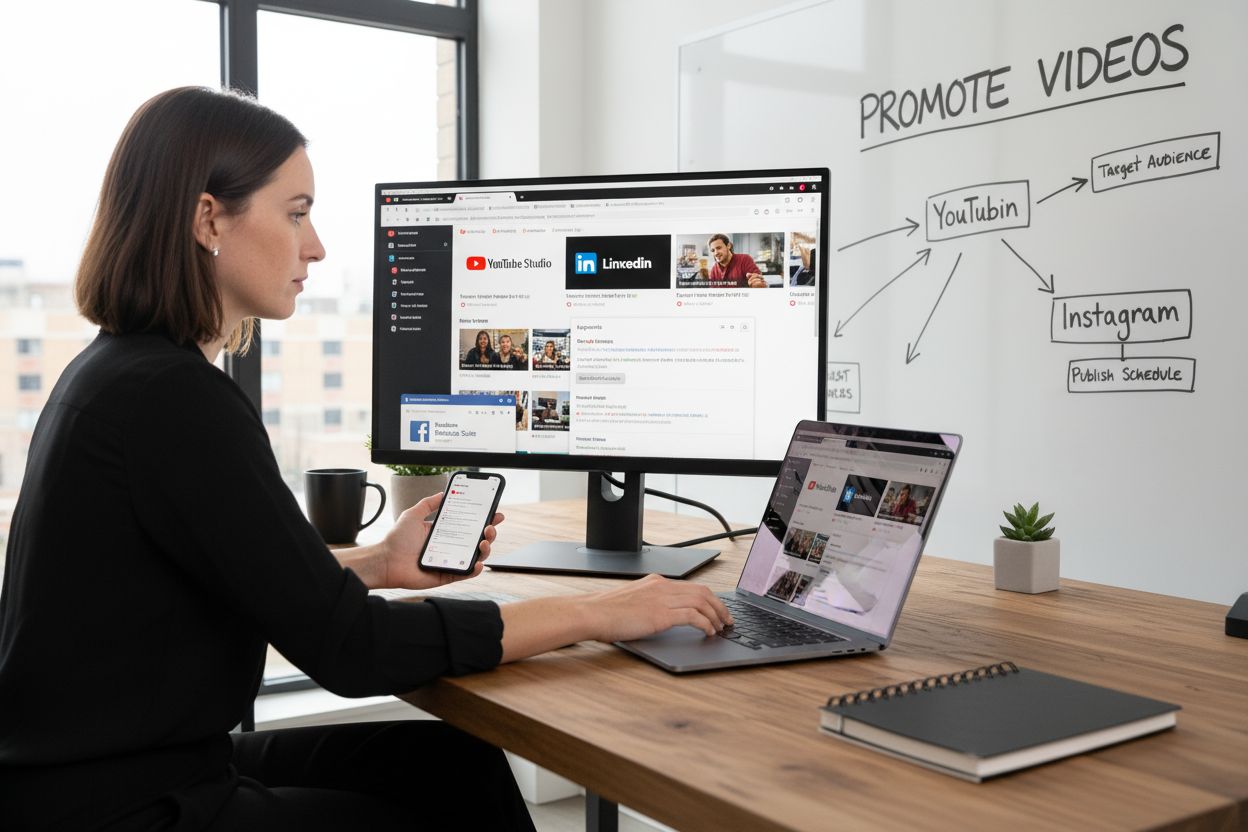
Successful video marketing transcends creating exceptional content it requires strategic distribution that maximizes visibility and engagement across diverse digital platforms. Multichannel promotion amplifies your message, ensuring your carefully crafted videos reach the right audience through multiple touchpoints.
Social media platforms offer unique opportunities for video distribution. Each platform demands a tailored approach that respects its specific audience dynamics and content consumption patterns. Learn more about YouTube brand marketing strategies to understand platform-specific nuances. On LinkedIn, professional and educational content thrives, while Instagram and TikTok favor more visually dynamic and emotionally compelling narratives. Twitter benefits from concise, punchy video snippets that capture attention quickly.
Email marketing remains a powerful yet underutilized video distribution channel. Integrate video thumbnails directly into newsletters, creating clickable visual elements that entice recipients to engage. Personalization is key. Segment your email lists to ensure video content resonates with specific audience subgroups, increasing the likelihood of meaningful interaction.
Paid advertising provides targeted video distribution opportunities. Platforms like Facebook, Instagram, and Google Ads offer sophisticated targeting mechanisms allowing you to reach precise audience segments based on demographics, interests, and online behaviors. Allocate budget strategically, starting with small test campaigns that help you understand which targeting parameters generate the most engagement.
Cross-platform promotion requires consistent messaging while respecting each platform’s unique communication style. A corporate training video might require slight modifications when shared between LinkedIn and YouTube. Adapt video length, thumbnail design, and accompanying text to match platform expectations. Some creators develop platform-specific cuts of their primary video, ensuring optimal viewing experience across different channels.
Collaboration and networking amplify video reach exponentially. Engage with industry influencers, professional networks, and complementary businesses willing to share your content. Mutual content sharing creates symbiotic marketing opportunities that expand your potential audience far beyond direct connections.
Verification of successful multichannel promotion involves tracking key performance indicators across platforms. Monitor metrics like view count, engagement rate, click through rate, and conversion attribution. Use analytics tools to understand which channels and specific content variations generate the most meaningful audience interactions.
This table summarizes the main digital channels for video promotion, highlighting each platform’s unique advantages and the recommended content approach discussed in the article.
Channel | Unique Advantage | Recommended Content Style |
Professional networking, B2B audience | Educational, value-focused, professional | |
Visual discovery, mobile-first | Visually dynamic, emotionally engaging | |
TikTok | Viral trends, high younger engagement | Short-form, creative, vertical format |
Real-time conversations, concise reach | Quick, attention-grabbing video snippets | |
Email Marketing | Direct, personalized communication | Thumbnails linked to video, segmented lists |
Paid Advertising | Precise targeting, scalable reach | Platform-optimized, test-driven variations |
Step 5: Analyze Performance and Adjust Strategy
Effective video marketing is an iterative process where continuous analysis and strategic adaptation become your competitive advantage. Performance measurement transforms raw data into actionable insights that drive meaningful improvements in your video content strategy.
Data collection begins with establishing a comprehensive analytics dashboard that aggregates metrics across multiple platforms. Each digital channel provides unique performance indicators: YouTube offers watch time and audience retention, Facebook tracks engagement rates, LinkedIn measures professional interaction, while website analytics reveal conversion impact. Explore our guide on streamlining video marketing workflow to understand advanced tracking techniques.
Quantitative metrics provide the foundational layer of performance analysis. Key performance indicators include view count, watch duration, click through rate, audience retention percentage, and conversion rates. However, numbers alone do not tell the complete story. Qualitative feedback from comments, direct audience messages, and subtle engagement signals offer deeper understanding of how your content genuinely resonates with viewers.
Segment your performance analysis by considering different audience groups. Examine how various demographic clusters interact with your video content. A video that performs exceptionally well among 25-34 year old professionals might generate minimal traction with older audiences. This granular understanding allows for targeted content refinement and more precise audience targeting in future video productions.
Competitive benchmarking adds critical context to your performance metrics. Study how similar businesses in your industry approach video marketing. What content formats generate high engagement? Which storytelling techniques capture audience attention? While direct imitation is discouraged, understanding industry trends helps you identify opportunities for differentiation and innovation.
Technical performance analysis extends beyond engagement metrics. Evaluate your video’s search engine optimization effectiveness by tracking organic search visibility, keyword rankings, and referral traffic. Platforms like Google Search Console provide insights into how search algorithms interpret and rank your video content.
The most critical aspect of performance analysis is transforming insights into strategic adjustments. Develop a systematic approach to content iteration:
Identify top performing video elements
Recognize consistent audience feedback patterns
Experiment with content modifications
Implement incremental improvements
Successful video marketing demands a growth mindset. Treat each video as a learning opportunity, understanding that perfection emerges through continuous refinement. Regular performance reviews every 30-60 days help maintain strategic agility, ensuring your video content remains dynamic, relevant, and effective in achieving your marketing objectives.
Elevate Your Business with Data-Driven Video Marketing
Struggling to find the right audience or unsure if your videos are generating real business results? Achieving true video marketing success takes more than just posting content. You need a solid foundation, clear goals, and a compelling visual story that grabs attention within seconds. The article highlighted that understanding your customers, creating high-quality engaging videos, and optimizing for every platform are essential. Many businesses still feel overwhelmed when it comes time to actually put these ideas into practice and see measurable returns.

Let Tulip Films turn your strategic vision into reality. Our team blends professional filmmaking and marketing expertise to create custom videos designed to reach your ideal audience and meet your specific goals. We focus on rapid delivery without sacrificing quality, so you get engaging content that actually moves viewers to act. Ready to go beyond the basics and see how a personalized approach to video production can unlock new growth for your business? Visit Tulip Films, discover our recent projects, and book a free consultation today. Make your brand stand out with videos that truly connect.
Frequently Asked Questions
What are the key steps to optimize video marketing for my business?
The key steps to optimize video marketing include defining your target audience and goals, creating high-quality, engaging content, optimizing videos for search engines and platforms, promoting videos across multiple channels, and analyzing performance to adjust your strategy.
How can I define my target audience for video marketing?
To define your target audience, create a detailed audience persona that includes demographic information, psychological characteristics, and their media consumption habits. Analyze existing customer data to identify patterns in engagement and purchasing behavior.
What is the SMART framework for setting video marketing goals?
The SMART framework for setting video marketing goals includes making your objectives Specific, Measurable, Achievable, Relevant, and Time-bound. For example, aiming to “increase video views by 40% within six months” meets all SMART criteria.
How do I analyze the performance of my video marketing strategy?
Analyze performance by collecting metrics across platforms, such as view counts, click through rates, and audience retention. Use qualitative feedback from viewers and segment your analysis by different audience demographics to refine your strategy.
Recommended
