How to Film Promotional Ads Effectively for Your Brand

Planning a promotional ad sounds straightforward, right? You just pick up a camera and start filming. But research shows that precise audience definition and SMART goal-setting can multiply your ad’s effectiveness. Most marketers jump straight into production and end up with forgettable results. The secret? The real power starts long before the first shot is filmed, when you lock in exactly who you are speaking to and what you want to achieve.
Table of Contents
Quick Summary
Key Point | Explanation |
1. Define your target audience thoroughly | Understand motivations, pain points, and media habits to create effective audience personas. |
2. Set SMART goals for your ad | Goals should be Specific, Measurable, Achievable, Relevant, and Time-bound for better effectiveness. |
3. Create a compelling narrative in your script | Use emotional storytelling to connect with viewers and clearly communicate your value proposition. |
4. Plan your shooting schedule and locations | Select locations that reflect your brand and ensure a well-organized shooting schedule to avoid disruptions. |
5. Focus on professional editing techniques | Organize footage, create a tight narrative, and refine audio to elevate the overall quality of your promotional ad. |
Step 1: Define Your Target Audience and Goals
Creating an effective promotional ad begins with crystal clear understanding of your audience and precise marketing objectives. This foundational step determines the entire trajectory of your video production, influencing everything from storytelling approach to visual aesthetics and messaging tone.
Identifying your target audience requires deep strategic analysis. Start by developing comprehensive audience personas that go beyond basic demographics. Consider psychographic elements like motivations, challenges, aspirations, and communication preferences. **A well-crafted persona provides a comprehensive blueprint for your promotional content.
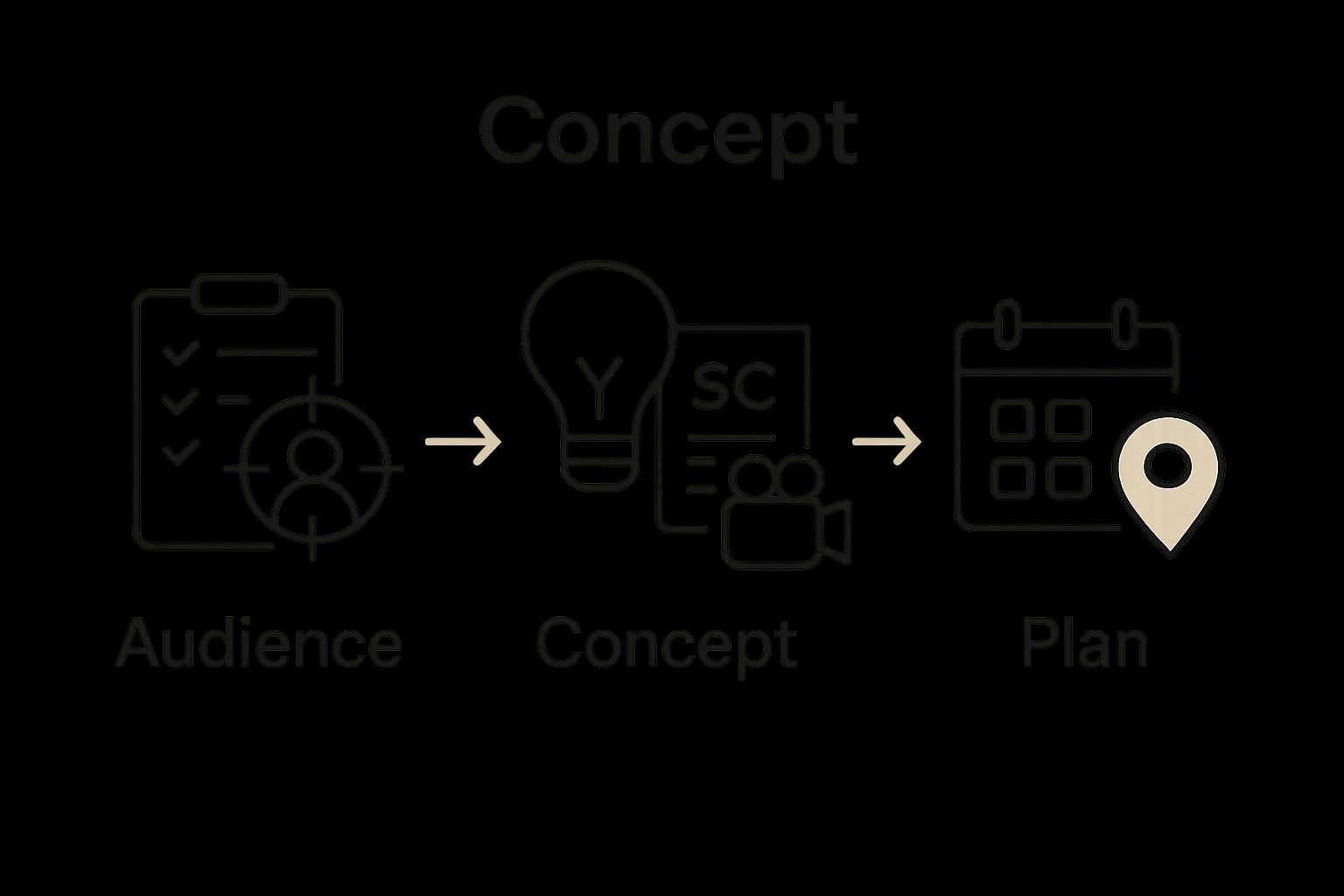
** For instance, if you are targeting professional services in Geneva, understand not just age and income, but their professional pain points, decision making processes, and media consumption habits.
Defining specific goals transforms your promotional ad from a generic communication piece into a strategic marketing tool. Your objectives might range from increasing brand awareness and generating leads to driving website traffic or promoting a specific product launch. Each goal demands a nuanced approach. Precise goal setting allows you to measure the ad’s effectiveness through specific key performance indicators (KPIs). These could include metrics like view count, engagement rate, conversion percentage, or direct sales attributed to the promotional video.
Technically, your goal definition should follow the SMART framework: Specific, Measurable, Achievable, Relevant, and Time-bound. Instead of a vague objective like “increase brand visibility,” craft a precise target such as “Generate 500 qualified website leads from our promotional ad within 60 days” or “Increase social media engagement by 35% through targeted video content.”
Learn more about optimizing your video marketing strategy to understand how strategic audience targeting can dramatically improve your promotional ad’s effectiveness. By meticulously defining your audience and goals, you create a powerful foundation that guides every subsequent creative and technical decision in your promotional ad production process.
Below is a summary table of the six main steps in filming an effective promotional ad, including the key outcome and a brief description for each step.
Step | Key Outcome | Brief Description |
Define Audience & Goals | Strategic foundation | Deep dive into your audience profiles and SMART objectives |
Create Concept & Script | Compelling narrative | Transform insights into emotionally resonant storytelling |
Gather Equipment & Setup | Professional-grade footage & sound | Ensure technical quality and production value |
Plan Schedule & Locations | Efficient, organized shoot | Coordinate all logistics, permits, and timing |
Film with Technique & Energy | Engaging and authentic footage | Apply cinematography skills and direct with enthusiasm |
Edit & Review for Quality | Polished, impactful final ad | Refine visuals, audio, and narrative structure |
Step 2: Create a Compelling Concept and Script
Transforming your strategic audience insights into a captivating promotional ad requires crafting a concept and script that resonates deeply and emotionally with viewers. This critical stage determines whether your audience will connect with your message or simply scroll past.
Begin by developing a core narrative that speaks directly to the emotional landscape of your target personas. Your concept should not merely describe product features but tell a story that illuminates how your solution transforms challenges into opportunities. Authenticity and emotional relevance are your most powerful storytelling tools. Consider what fundamental human experience or aspiration your brand addresses. Are you solving a frustration? Enabling a dream? Simplifying a complex process?
Scripting demands precision and strategic creativity. Start by outlining a clear narrative arc that captures attention within the first three seconds. Professional videographers understand that modern audiences have increasingly shorter attention spans, making those initial moments crucial. Your script should quickly establish a relatable scenario, introduce a problem, and demonstrate how your brand provides an elegant solution. Brevity and clarity trump elaborate explanations. Aim for concise, impactful language that communicates complex ideas through simple, memorable statements.
Explore our insights on resolving script and messaging challenges to refine your narrative approach. When developing your script, incorporate psychological triggers that prompt viewer engagement. Use storytelling techniques like unexpected twists, genuine human moments, or surprising perspectives that make viewers feel understood rather than marketed to.
Verify your script’s effectiveness by testing it against key criteria: Does it clearly communicate your value proposition? Can someone understand the core message without industry background? Will it evoke an emotional response aligned with your brand’s goals? A compelling script transforms a promotional ad from a sales pitch into a narrative experience that viewers willingly embrace.
Step 3: Gather the Right Equipment and Setup
Professional promotional video production hinges on selecting appropriate equipment that matches your creative vision and technical requirements. Your gear choices will directly impact the visual storytelling quality and overall production value of your promotional ad.
Camera selection represents the most critical equipment decision. While professional cinema cameras offer exceptional quality, modern mirrorless and digital cameras provide remarkable performance at more accessible price points. Look for cameras with 4K resolution, good low light performance, and interchangeable lens capabilities. Consider factors like sensor size, frame rate options, and color reproduction capabilities. For smaller brands or startups, high end smartphones with advanced camera systems can surprisingly deliver professional results when used strategically.
Lighting and audio equipment are equally crucial components of your setup. Professional lighting transforms ordinary scenes into compelling visual narratives. Invest in versatile lighting kits with adjustable color temperatures and soft box options that create flattering, professional illumination. For audio, prioritize external microphones over built in camera sound capture. Wireless lavalier microphones provide crisp, clear sound while offering mobility during filming. Shotgun microphones work excellently for capturing ambient sounds and dialogue with precision.
Analyze advanced video production techniques to understand how technical setup influences storytelling quality. Your equipment verification checklist should include testing each component before filming. Confirm camera settings match your intended aesthetic, lighting provides consistent illumination across your planned shots, and audio equipment captures clean, interference free sound. A comprehensive pre production equipment test prevents unexpected technical challenges during actual filming and ensures your promotional ad maintains professional production standards throughout the creative process.
Here is a checklist table to help you verify your equipment and setup before filming your promotional ad, ensuring professional quality throughout the production process.
Equipment/Setup Item | What to Check For | Purpose |
Camera | 4K resolution, proper settings, clean lens | Capture high-quality visuals |
Lenses | Interchangeable, correct type for intended shots | Achieve desired framing and creative effects |
Lighting Equipment | Proper positioning, even coverage, correct color temp | Ensure professional, flattering illumination |
Audio Equipment | External mics, clear sound, checked battery levels | Capture crisp, interference-free audio |
Stabilization Gear | Working gimbals, tripods, or handheld rigs | Create smooth and steady shots |
Location Environment | Lighting consistency, background noise, clean setup | Avoid technical issues and distractions |
Backup Power/Storage | Extra batteries, SD cards, power banks available | Maintain uninterrupted filming sessions |
Step 4: Plan Your Shooting Schedule and Locations
Effective location and schedule planning transforms your promotional ad from a basic recording into a strategic visual narrative. This crucial stage requires meticulous coordination of logistical elements, creative vision, and practical constraints to ensure smooth production flow.
Location scouting demands comprehensive strategic thinking. Select environments that authentically reflect your brand narrative and resonate with your target audience personas. Consider how different spaces communicate subtle brand messages. An industrial workspace might convey innovation for a tech company, while a minimalist modern office suggests professionalism and precision. Technical considerations like natural lighting, acoustic properties, and background noise levels become equally important. Scout potential locations during similar times of day you plan to shoot, understanding how lighting and ambient sounds might change.
Creating a detailed shooting schedule requires balancing creative aspirations with practical realities. Start by breaking your script into specific shot sequences, estimating realistic time requirements for each segment. Professional productions typically allocate more time than initially anticipated to accommodate unexpected challenges. Factor in setup and breakdown times, potential equipment adjustments, talent preparation, and buffer periods for creative spontaneity. Consider potential weather variations if shooting outdoors, backup location options, and contingency plans for technical or logistical interruptions.
Permission and legal considerations form another critical scheduling component. Secure location permits well in advance, understanding local regulations about commercial filming. Some public and private spaces require specific authorizations, insurance documentation, or potential location fees. Communicate clearly with property managers, explaining your production scope, expected duration, and specific areas you intend to utilize.
Explore comprehensive video production planning strategies to refine your approach. Your final schedule verification should include a detailed shot list, precise location details, equipment checklist, talent availability confirmations, and flexible contingency plans. A well orchestrated shooting schedule transforms potential chaos into a streamlined, professional production experience.
Step 5: Film with Professional Techniques and Enthusiasm
Filming your promotional ad transforms abstract planning into tangible visual storytelling. This stage requires technical precision balanced with creative passion, turning your strategic concept into a compelling narrative that captures audience attention.
Composition represents the visual foundation of your promotional video. Master fundamental cinematography techniques like the rule of thirds, which involves mentally dividing your frame into nine equal sections and positioning key elements along these intersecting lines. This creates visual tension and guides viewer focus naturally. Experiment with diverse camera angles to add dynamism. Wide shots establish context, medium shots convey interaction, and close ups reveal emotional nuance. Movement matters equally. Smooth camera movements using stabilizers or deliberate handheld techniques can dramatically enhance storytelling energy.
Performance direction becomes critical when working with talent or presenters. Authentic enthusiasm trumps perfection. Coach your on camera participants to communicate naturally, focusing on genuine emotional connection rather than rigid scripted delivery. Encourage multiple takes, allowing performers to explore subtle variations in tone and energy. Professional filming involves creating a comfortable environment where talent feels empowered to express themselves genuinely. Technical preparation meets creative spontaneity when you balance structured planning with room for unexpected magical moments.
Explore advanced professional film production techniques to elevate your visual storytelling capabilities. Technical verification involves reviewing footage immediately after shooting, checking visual consistency, sound quality, and emotional resonance. Look for crisp focus, balanced lighting, clear audio, and natural performer interactions. Successful filming captures not just visual information but the underlying emotional narrative that transforms a simple promotional ad into a memorable brand experience.
Step 6: Edit and Review Your Promotional Ads for Quality
Post production editing transforms raw footage into a polished, compelling narrative that communicates your brand message with precision and emotional impact. This critical stage determines whether your promotional ad will captivate audiences or fade into forgettable background noise.
Professional editing requires both technical skill and creative storytelling sensibility. Begin by organizing your raw footage meticulously, reviewing all captured material and selecting the most powerful, authentic segments. Focus on maintaining a tight narrative arc that communicates your core message within the first 15 seconds. Modern audiences have increasingly shorter attention spans, making every visual second crucial. Use precise cutting techniques that maintain narrative flow while eliminating unnecessary footage. Transitions should feel seamless and intentional, guiding viewers through your brand story without jarring interruptions.
Color grading and audio refinement represent sophisticated editing techniques that elevate production quality. Color correction ensures visual consistency across different shots, creating a cohesive aesthetic that reinforces your brand identity. Adjust color temperature, saturation, and contrast to create a specific emotional atmosphere. Audio editing demands equal precision. Clean background noise, balance sound levels, and potentially integrate subtle background music or sound effects that complement your narrative without overwhelming the primary message. Professional audio can transform viewer perception, adding emotional depth and credibility to your promotional content.
Discover comprehensive strategies for creating impactful promotional business videos to refine your post production approach. Your final editing verification should include multiple objective review stages. Watch the video from different perspectives ask colleagues for honest feedback, and critically assess whether the final product genuinely communicates your original strategic objectives. A successful promotional ad does more than showcase information it creates an emotional connection that inspires viewer action.
Ready to Transform Your Brand with Powerful Promotional Video?
You have just discovered what makes an effective promotional ad stand out—the need for crystal clear audience targeting, emotionally driven scripting, professional-grade visuals, and expertly polished edits. However, turning these strategic concepts into a video that truly connects with your customers is where many brands struggle. Creating a seamless production process, achieving top-tier quality, and delivering rapid results can feel overwhelming if you lack a dedicated video partner.

Imagine what your brand could achieve with a team that does more than simply film. At Tulip Films, we specialize in converting your goals and story into engaging, high-quality promotional videos. Whether you want to capture attention, strengthen emotional connection, or increase sales, our bespoke approach ensures every second of your ad is crafted to drive results.
Take the first step now. Visit www.tulipfilms.ch to see how our proven process makes video production easy and impactful. Schedule your free consultation today and let us handle the details—from concept to final cut, so you can focus on your brand’s success.
Frequently Asked Questions
How can I define my target audience for a promotional ad?
To define your target audience, develop detailed audience personas that include not only demographics but also psychographics like motivations and challenges. Conduct surveys or interviews to deepen your understanding of their needs and preferences.
What makes a compelling concept for a promotional ad?
A compelling concept focuses on storytelling that resonates emotionally with your audience. Identify how your brand addresses specific challenges or aspirations and craft a narrative that highlights this transformation effectively.
What equipment do I need to film a professional promotional ad?
To film a professional promotional ad, invest in a camera capable of 4K resolution, proper lighting kits, and external microphones for high-quality audio. Ensure your setup includes essential elements like stabilization gear for smooth shots and diverse lens options for creative flexibility.
How can I plan an effective shooting schedule for my promotional video?
To plan an effective shooting schedule, create a shot list that breaks down your script into sequences with estimated times for each. Allow extra time for unexpected delays and secure necessary location permits to avoid interruptions during filming.
What steps should I take during the editing process of my promotional ad?
During the editing process, focus on organizing your raw footage, selecting the most powerful clips, and ensuring a tight narrative that communicates the message within the first 15 seconds. Utilize color grading techniques to maintain visual consistency and refine audio quality for professional results.
How can I measure the success of my promotional ad?
Measure the success of your promotional ad by setting specific key performance indicators (KPIs), such as conversion rates or engagement metrics. Track these KPIs over a defined period, such as within 60 days of launch, to understand your ad’s effectiveness.
Recommended
