What is Post-Production? Understanding Its Importance


Post-production sounds like the finishing touch for movies and video, making everything look neat and tidy. But get this. The magic goes way deeper than just stitching clips together and fixing color. Professional sound design can increase viewer engagement by up to 40%, turning ordinary footage into something that pulls viewers in. Most people think editing is just a technical step, but it is where the real storytelling happens.
Table of Contents
Quick Summary
Takeaway | Explanation |
Post-production is essential for video quality | This phase refines raw footage into a polished final product, enhancing storytelling and audience engagement. |
Key components enhance visual narratives | Video editing, sound design, and visual effects work together to create cohesive and impactful stories. |
Professional post-production boosts brand perception | High-quality videos reflect credibility, helping organizations stand out in competitive markets. |
Emerging technologies are transforming post-production | AI and automation streamline processes, allowing creators to focus more on storytelling and less on technical tasks. |
Strategic visual communication drives marketing success | Effective post-production connects deeply with audiences, shaping emotional brand narratives that resonate. |
What is Post-Production? A Basic Definition
Post-production represents the critical final stage of video and film creation where raw footage transforms into a polished, professional visual narrative. This comprehensive process occurs after shooting has been completed, involving multiple technical and creative steps that shape the final audiovisual product.
Understanding the Core Concept
At its essence, post-production is the comprehensive editing and enhancement phase where videographers and filmmakers refine their original recorded material. This stage goes far beyond simple cutting and splicing, encompassing sophisticated techniques that elevate visual storytelling.
Professionals utilize advanced software and creative skills to manipulate visual and audio elements, creating a cohesive and compelling final product.
Key Components of Post-Production
Post-production involves several crucial technical processes that work together to create the final visual experience:
Video Editing: Arranging and trimming raw footage to create a coherent narrative flow
Color Correction: Adjusting and balancing color tones to ensure visual consistency
Sound Design: Integrating background music, sound effects, and balancing audio levels
Visual Effects: Adding digital enhancements, graphics, and special visual elements
Title and Graphics Integration: Creating and inserting text overlays, credits, and supporting visual graphics
According to Adobe Creative Technologies, post-production transforms raw visual content into a refined, professional final product through meticulous technical and creative processes. The goal is not just to edit, but to craft a compelling visual narrative that resonates with the intended audience.
Whether creating corporate videos, event recordings, or promotional content, understanding post-production helps businesses appreciate the complex artistry behind professional video creation. Each stage requires specialized skills, technical expertise, and creative vision to produce high-quality visual communication that effectively tells a story and engages viewers.
The table below summarizes the key components of post-production and describes their functions within the video creation process.
Component | Function |
Video Editing | Arranging and trimming footage to create a coherent narrative flow |
Color Correction | Adjusting color tones for visual consistency |
Sound Design | Integrating music, effects, and balancing audio levels |
Visual Effects | Adding digital enhancements, graphics, and special visuals |
Title and Graphics Integration | Creating and inserting text overlays, credits, and supporting graphics |
The Importance of Post-Production in Visual Media
Post-production serves as the critical transformation stage where raw visual content evolves into compelling, professional media that captures audience attention and communicates messages effectively. This complex process represents far more than technical editing, functioning as the bridge between captured footage and final storytelling.
Enhancing Visual Communication
Visual media relies on post-production to elevate raw recordings into meaningful narratives. Professionals use sophisticated techniques to refine visual quality, balance color tones, integrate seamless transitions, and create a cohesive viewing experience. These technical interventions transform ordinary footage into extraordinary visual stories that engage and resonate with viewers.
Strategic Value for Businesses
For organizations seeking powerful visual communication, post-production offers significant strategic advantages:
Brand Perception: High-quality videos reflect professional standards and organizational credibility
Message Clarity: Precise editing ensures key communication points are highlighted effectively
Emotional Impact: Strategic sound design and visual effects can dramatically enhance viewer engagement
Competitive Differentiation: Professional post-production sets content apart in saturated media landscapes
According to Wyzowl Video Marketing Research, 91% of businesses use video as a marketing tool, underscoring the critical role of professional post-production in creating impactful visual content.
Post-production transcends mere technical manipulation, representing a sophisticated artistic process where creativity and technical expertise converge. Whether producing corporate videos, event documentaries, or promotional materials, the post-production phase determines the ultimate effectiveness of visual communication, transforming raw recordings into powerful, memorable experiences that connect with audiences and achieve strategic communication objectives.
The following table highlights the strategic value post-production brings to businesses by outlining the benefits and their impact on video communication effectiveness.
Strategic Value | Description |
Brand Perception | High-quality videos reflect professionalism and credibility |
Message Clarity | Editing ensures key messages are clear and prominent |
Emotional Impact | Sound design and visual effects increase viewer engagement |
Competitive Differentiation | Sets content apart in saturated media landscapes |
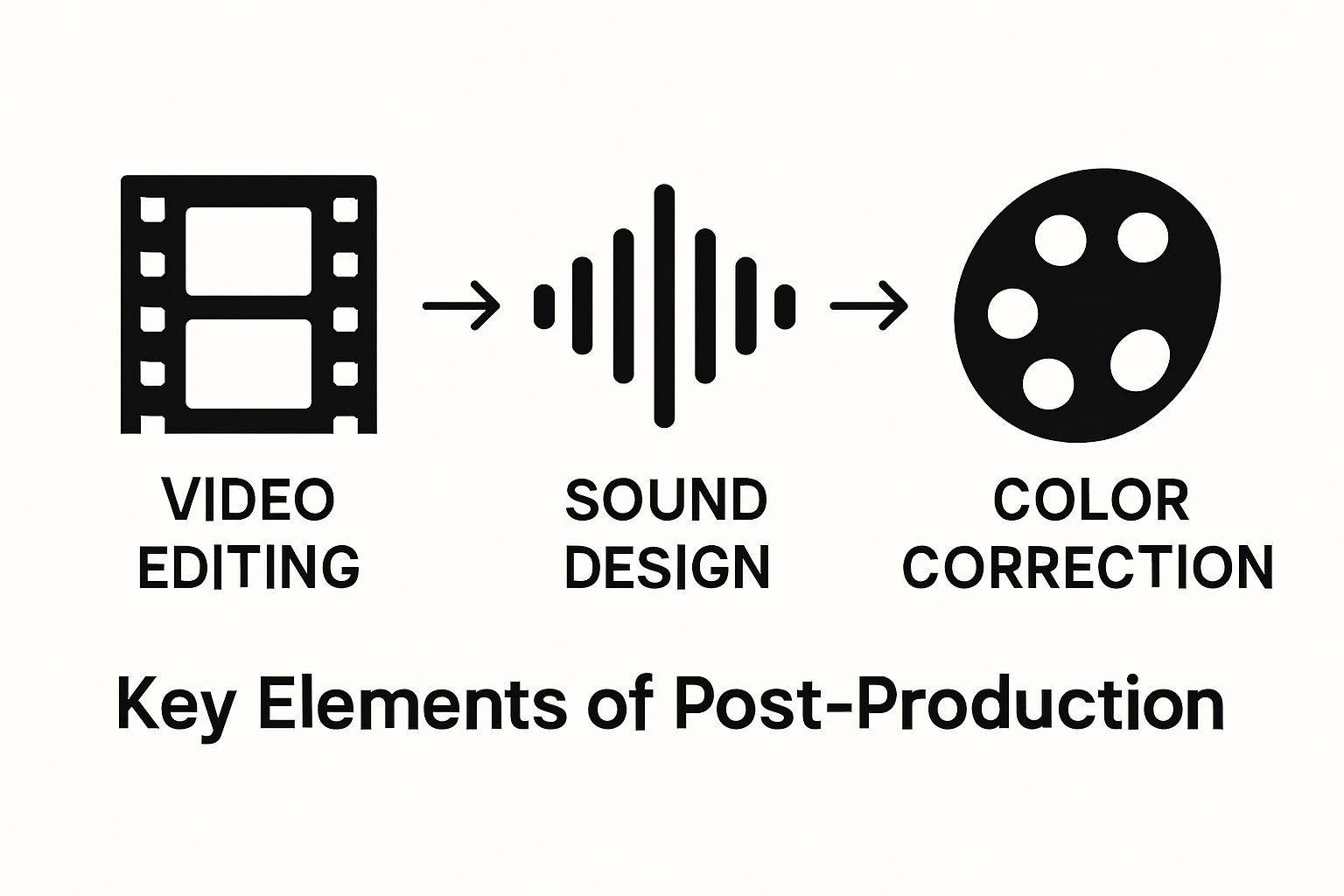
Key Elements of Post-Production: From Editing to Sound
Post-production transforms raw footage into a polished visual experience through a series of intricate technical and creative processes. Each element plays a critical role in crafting a compelling narrative that captures viewers’ attention and communicates messages with precision and impact.
Video Editing: Crafting the Narrative
Video editing represents the foundational stage of post-production, where raw footage is carefully selected, arranged, and trimmed to create a coherent storyline. Editors make strategic decisions about sequence, pacing, and visual flow, selecting the most powerful moments that convey the intended message. They use advanced software to cut scenes, create smooth transitions, and establish a rhythm that keeps audiences engaged.
Technical Sound Design
Sound design goes beyond simple audio recording, involving complex layering and manipulation of audio elements to enhance the visual storytelling:
Background Music: Creating emotional resonance and supporting narrative mood
Sound Effects: Adding depth and realism to visual scenes
Voiceover Integration: Ensuring clear and professional audio narration
Audio Balancing: Harmonizing different sound elements for optimal clarity
According to Audiovisual Production Research, professional sound design can increase viewer engagement by up to 40%, demonstrating its critical importance in visual media production.
The intricate process of post-production requires a delicate balance between technical precision and creative interpretation. Professionals must seamlessly blend video editing, color correction, sound design, and visual effects to create a unified, compelling visual experience that communicates effectively and resonates with the target audience. Each element contributes to transforming raw recordings into professional, impactful visual narratives that capture attention and deliver messages with extraordinary clarity.
How Post-Production Enhances Marketing and Branding
Post-production has evolved from a technical process to a strategic communication tool that significantly impacts marketing effectiveness and brand perception. By transforming raw visual content into refined, compelling narratives, businesses can create powerful emotional connections with their target audiences.
Creating Emotional Brand Narratives
Brands leverage post-production techniques to craft stories that transcend traditional advertising, moving beyond mere product presentation to create meaningful audience engagement. Professional editing allows organizations to strategically highlight key messaging, control emotional tone, and present their brand identity with precision and authenticity. Color grading, thoughtful transitions, and sophisticated sound design enable companies to communicate complex brand values in seconds.
Strategic Visual Communication
Marketers recognize post-production as a critical tool for differentiating brand messaging in crowded digital landscapes. These sophisticated techniques offer powerful advantages:
Consistent Brand Identity: Maintaining visual and tonal uniformity across marketing materials
Emotional Resonance: Creating visual experiences that connect deeply with viewer sentiments
Narrative Complexity: Communicating multilayered brand stories through strategic visual storytelling
Professional Credibility: Demonstrating organizational quality through high-production value content
According to Content Marketing Institute Research, professionally produced video content can increase audience engagement by up to 300%, underscoring the transformative power of expert post-production.
For businesses seeking to elevate their video production strategies, understanding post-production represents more than technical knowledge—it is a critical marketing competency. By treating visual content as a sophisticated communication medium, organizations can create memorable brand experiences that cut through digital noise, build meaningful audience connections, and drive strategic marketing objectives with unprecedented effectiveness.

Post-Production Trends and Future Directions
The landscape of post-production is rapidly evolving, driven by technological innovations that are reshaping how visual content is created, processed, and delivered. These emerging trends are not just changing technical workflows but fundamentally transforming the creative possibilities for visual storytelling.
Artificial Intelligence and Automation
Artificial intelligence is revolutionizing post-production processes, introducing unprecedented levels of efficiency and creative potential. Machine learning algorithms can now automate complex tasks such as color grading, noise reduction, and even initial editing selections. These technologies enable faster production cycles, reduce manual labor, and provide creators with more time to focus on creative decision-making and narrative refinement.
Emerging Technological Innovations
The future of post-production is being shaped by groundbreaking technological developments that expand creative boundaries:
Cloud-Based Collaboration: Enabling global teams to work simultaneously on projects
Real-Time Rendering: Accelerating visual effects and animation processes
Virtual Production Techniques: Blending physical and digital filmmaking environments
Advanced Machine Learning Editing: Automated content analysis and intelligent editing suggestions
According to Gartner Technology Research, AI technologies are projected to transform creative industries, with an estimated 40% of post-production tasks potentially automated by 2025.
These technological shifts are not just technical upgrades but represent a fundamental reimagining of visual storytelling. Professional video production is moving beyond traditional boundaries, creating opportunities for more dynamic, responsive, and innovative content creation. Professionals who embrace these emerging technologies will be positioned to deliver more compelling, sophisticated visual experiences that capture audience imagination and drive meaningful engagement.
Transform Your Raw Footage Into Powerful Stories With Tulip Films
You have learned how post-production is the phase that brings your message to life, turning disorganized raw footage into a polished narrative that speaks directly to your audience. Many businesses struggle to convert recordings into high-quality visuals that truly reflect their brand. If you feel your current videos lack emotional impact, clarity, or the professional edge needed to stand out, this is the moment to upgrade your approach.

Let Tulip Films bridge the gap between your vision and the final masterpiece. Our expert video production team combines technical skill with a creative edge, ensuring every project receives the attention it deserves. No matter your goal, we offer a rapid and seamless post-production process that delivers real results for your business.
Take the next step and showcase your brand through stunning, professional video content. Explore our portfolio and book your free consultation at www.tulipfilms.ch. The difference in quality and audience engagement starts right here.
Frequently Asked Questions
What is post-production in video production?
Post-production is the final stage of video creation, where raw footage is edited and enhanced into a polished visual product. This process includes video editing, sound design, color correction, and the addition of visual effects.
Why is post-production important for visual storytelling?
Post-production is crucial because it transforms raw recordings into compelling narratives. Through editing and enhancements, filmmakers can create a cohesive story that effectively communicates their message and engages the audience.
What are the key elements involved in post-production?
Key elements of post-production include video editing, color correction, sound design, integration of visual effects, and the addition of titles and graphics. Each component plays a vital role in crafting a polished final product.
How does post-production impact marketing and branding?
Post-production significantly enhances marketing and branding by creating professional, high-quality video content that elevates brand perception. It allows businesses to craft emotional narratives that resonate with audiences and effectively communicate brand values.
Recommended
