Craft Your Visual Branding Guide 2025 for Local Success

Building a visual branding guide for 2025 is about more than picking nice colors and trendy logos. Research from Harvard Business School shows that effective audience segmentation can redefine how brands connect with real people. Most brands get stuck tweaking their old style guides and miss the massive shifts in what audiences expect. The real magic happens when you rethink your brand from the inside out and let every visual decision flow from a bold, honest core.
Table of Contents
Quick Summary
Key Point | Explanation |
1. Analyze Brand Identity Thoroughly | Understand your brand’s mission, values, and uniqueness before creating visual elements. |
2. Define Detailed Audience Personas | Develop psychographic profiles of your target audience for more resonant visual branding. |
3. Create Comprehensive Design Guidelines | Establish clear visual elements like color palettes and typography for all branding materials. |
4. Implement Consistently Across Platforms | Maintain brand consistency across digital and physical touchpoints to strengthen identity. |
5. Regularly Review and Refine Branding | Conduct performance audits and adjust branding strategies to stay relevant and effective. |
Step 1: Analyze Your Brand Identity and Goals
Crafting a robust visual branding guide for 2025 begins with a deep, introspective analysis of your brand’s core identity and strategic objectives. This initial step is crucial for creating a visual narrative that authentically represents your business and resonates with your target audience.
Starting with self-discovery means understanding the fundamental essence of your brand beyond surface-level aesthetics. Examine your company’s mission, values, and unique value proposition. What makes your organization distinctive? What story do you want to communicate through visual elements? This exploration requires honest reflection and potentially challenging conversations with key stakeholders.
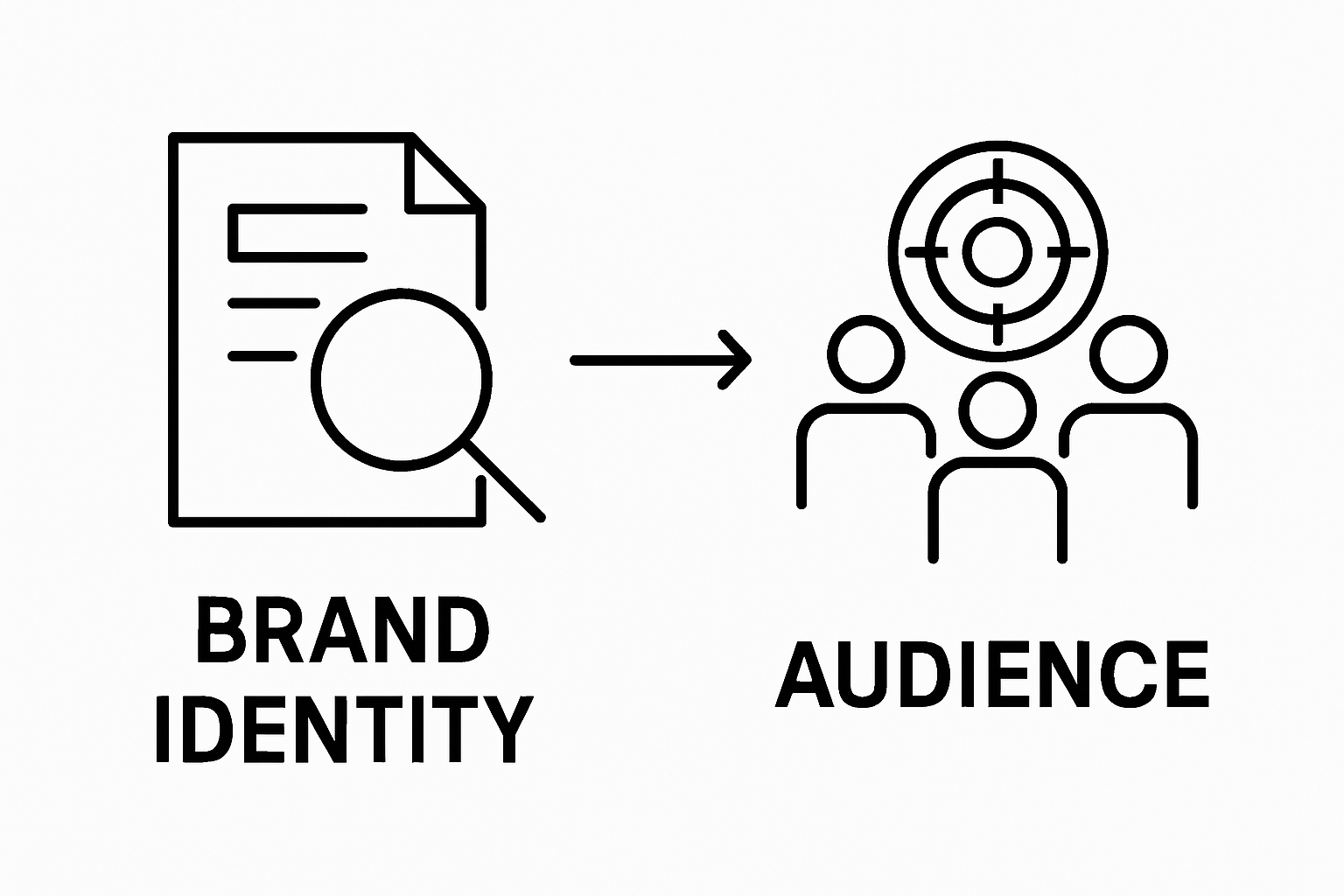
Document your brand’s personality traits as if describing a person. Are you professional and structured, or creative and dynamic? These characteristics will directly influence color palettes, typography, imagery styles, and overall visual communication strategies. Learn more about visual storytelling to understand how these personality traits translate into compelling visual narratives.
Research from the U.S. Small Business Administration emphasizes the importance of aligning brand identity with market expectations. Conduct a comprehensive audit of your current visual materials, identifying strengths and inconsistencies. Compare your existing visual assets against your documented brand personality and strategic goals.
Key verification criteria for completing this step include:
A clear, written description of your brand’s core personality
Documented mission and value statements
An inventory of current visual assets
Initial insights into potential visual branding improvements
Remember, this analysis is not a one-time event but an ongoing process. Your visual branding guide should remain flexible, allowing for evolution while maintaining a consistent core identity. The insights gained from this initial step will serve as the foundation for developing a cohesive and impactful visual strategy that distinguishes your brand in the competitive 2025 marketplace.
Step 2: Define Your Target Audience and Market Trends
After establishing your brand’s core identity, the next critical step in developing a compelling visual branding guide for 2025 involves precisely defining your target audience and understanding emerging market trends. This phase transforms your strategic vision into a targeted approach that speaks directly to the people who matter most to your business.
Begin by creating a detailed audience persona that goes beyond basic demographics. Dive deep into the psychographic landscape of your potential customers. What are their motivations, challenges, aspirations, and communication preferences? Understanding these nuanced details allows you to craft visual branding that resonates on an emotional level. Discover advanced audience research techniques to refine your approach.
Research from Harvard Business School highlights the importance of comprehensive audience segmentation. Map out your audience across multiple dimensions including age, occupation, lifestyle, digital behavior, and consumption patterns. This multifaceted approach ensures your visual branding speaks directly to specific audience segments, creating a more personalized and engaging brand experience.
Market trend analysis requires continuous observation and adaptability. Monitor visual communication shifts in your industry, paying attention to emerging design aesthetics, color trends, graphic styles, and digital presentation methods. Tools like trend reports, design publications, and social media analytics can provide valuable insights into evolving visual preferences.
Key verification criteria for completing this step include:
A comprehensive audience persona document
Mapped audience segments with detailed characteristics
Current market trend analysis report
Initial visual branding recommendations based on audience insights
Remember that audience understanding is not static. Regularly revisit and update your audience personas and trend insights. The most successful brands remain flexible, allowing their visual identity to evolve while maintaining a consistent core message that speaks directly to their audience’s changing needs and expectations.
The table below helps organize the key verification criteria for Step 2, making it easy to review and confirm each requirement is met.
Verification Criteria | Description |
Audience Persona Document | Comprehensive, detailed description of your primary and secondary audience personas |
Audience Segmentation Mapping | Mapped characteristics such as age, occupation, lifestyle, and digital behavior |
Market Trend Analysis Report | Up-to-date summary of relevant visual and design trends in your industry |
Initial Visual Branding Recommendations | Early ideas or suggestions informed by audience and trend insights |
Step 3: Develop Visual Elements and Design Guidelines
With a clear understanding of your brand identity and target audience, the next critical phase involves developing a comprehensive set of visual elements and design guidelines that will serve as the blueprint for your brand’s visual communication in 2025. This step transforms abstract concepts into tangible, actionable design principles that will guide all future visual content.
Begin by establishing a core visual language that includes a carefully curated color palette, typography selections, and graphic design principles. Your color scheme should reflect your brand’s personality while maintaining psychological and emotional resonance with your target audience. Select no more than 3-5 primary colors that work harmoniously and provide sufficient contrast for readability and visual impact. Explore professional visual branding techniques to refine your approach.
According to California Design System, accessibility should be a fundamental consideration in your visual design strategy. Choose fonts that are legible across different devices and platforms, ensuring that your visual communication remains clear and inclusive. Consider creating a detailed style guide that outlines precise usage instructions for logos, color applications, spacing, and graphic element interactions.
Develop a consistent approach to imagery that aligns with your brand’s personality. This includes guidelines for photography styles, illustration techniques, iconography, and visual treatments. Determine whether your visual approach will be minimalist, vibrant, professional, playful, or a unique blend that sets you apart from competitors.
Key verification criteria for completing this step include:
A comprehensive visual style guide document
Defined color palette with specific hex/RGB codes
Typography selections with usage guidelines
Imagery and graphic design principles
Logo usage and placement instructions
Remember that your visual branding guidelines are not static. Build flexibility into your system, allowing for subtle evolution while maintaining a consistent core identity. The most effective visual branding guides provide clear direction without stifling creativity, enabling your brand to remain dynamic and responsive to changing market trends.
Step 4: Implement Your Branding Across All Platforms
Implementing your visual branding strategy across multiple platforms requires a meticulous and strategic approach that ensures consistent representation of your brand’s identity. This step transforms your carefully crafted design guidelines into a living, breathing visual ecosystem that communicates your brand’s essence across every touchpoint.
Start by creating a comprehensive implementation roadmap that prioritizes your most critical communication channels. Digital platforms demand special attention, including websites, social media profiles, email templates, and digital marketing materials. Each platform presents unique design challenges, requiring subtle adaptations of your core visual identity while maintaining absolute consistency. Explore advanced visual integration techniques to enhance your brand’s digital presence.
Research from the California Design System emphasizes the importance of creating a seamless user experience across different devices and interfaces. This means developing responsive design templates that maintain your visual integrity whether viewed on a mobile phone, tablet, or desktop computer. Pay careful attention to how your color palette, typography, and graphic elements scale and transform across different screen sizes and resolutions.
Physical branding materials require equally thoughtful implementation. This includes business cards, letterheads, signage, merchandise, packaging, and print marketing collateral. Each physical touchpoint should feel like a natural extension of your digital presence, creating a cohesive brand experience that reinforces your visual identity.
Key verification criteria for completing this step include:
Completed digital platform design adaptations
Consistent visual representation across all communication channels
Responsive design templates for multiple device types
Updated physical branding materials
Comprehensive documentation of implementation process
Remember that brand implementation is an ongoing process. Regularly audit your visual communications to ensure continued alignment with your brand guidelines. The most successful brands treat their visual identity as a living system that can subtly evolve while maintaining its core recognizability and emotional resonance.
Step 5: Review and Refine Your Visual Branding
The final step in crafting your visual branding guide for 2025 involves a critical process of review, reflection, and strategic refinement. This phase transforms your initial design strategy into a living, adaptable visual system that can evolve with your brand’s changing landscape and audience expectations.
Begin by conducting a comprehensive performance audit of your visual branding implementation. Gather quantitative and qualitative data from multiple sources including audience feedback, engagement metrics, and stakeholder insights. Analytics tools will be crucial in understanding how your visual elements are perceived and interacted with across different platforms. Explore advanced brand performance analysis techniques to gain deeper insights into your visual communication effectiveness.
Research from the University at Buffalo emphasizes the importance of authenticity and representation in visual communications. Critically evaluate your visual materials through the lens of inclusivity and diversity. Ensure that your imagery genuinely reflects the complexity and richness of your target audience, avoiding stereotypical or tokenistic representations.
Develop a systematic approach to ongoing refinement. This means creating a feedback loop that allows for continuous improvement of your visual branding elements. Schedule quarterly or bi-annual review sessions where you reassess your visual guidelines, analyze performance data, and make incremental adjustments that keep your brand feeling fresh and relevant.
Key verification criteria for completing this step include:
Comprehensive visual branding performance report
Documented audience and stakeholder feedback
Identified areas for potential visual refinement
Updated visual branding guidelines reflecting new insights
Clear action plan for future brand evolution
Remember that your visual branding guide is not a static document but a dynamic blueprint for your brand’s visual communication. The most successful brands maintain a delicate balance between consistency and adaptability, allowing their visual identity to breathe and grow while preserving its core essence and emotional connection with the audience.
Step 6: Train Your Team on Brand Consistency
Transforming your visual branding guide from a document into a lived organizational experience requires comprehensive team training that goes beyond simple instruction. This step is about creating a shared understanding and genuine commitment to your brand’s visual identity across every level of your organization.
Begin by developing a comprehensive training program that breaks down your visual branding guidelines into digestible, engaging learning modules. These modules should not just explain the rules but help team members understand the underlying philosophy and emotional resonance of your brand’s visual language. Explore effective brand communication strategies to enhance your training approach.
Research from the University at Buffalo emphasizes the importance of creating interactive and memorable training experiences. Design workshops that include practical exercises where team members actively apply visual branding principles. Consider creating scenario-based learning experiences that demonstrate how to maintain brand consistency across different communication contexts, from social media posts to client presentations.
Implement a multi-channel training approach that accommodates different learning styles. This might include video tutorials, live workshops, written guidelines, interactive online modules, and periodic refresher sessions. Crucially, make these resources easily accessible to all team members, ensuring that your visual branding guidelines are not just a static document but a dynamic, living resource.
Key verification criteria for completing this step include:
The following table summarizes the recommended resources and formats for effective team training on visual branding, helping you plan your internal rollout.
Training Resource | Format | Purpose |
Learning Modules | Video, written, live | Teach branding philosophy and guide comprehension |
Workshops | In-person, virtual | Hands-on practice and real-world scenario application |
Brand Resource Library | Digital repository | Central, ongoing access to all branding guidelines |
Online Training Modules | Interactive e-learning | Self-paced reinforcement and refresher training |
Team Assessments | Surveys, evaluations | Ensure understanding and measure training effectiveness |
Completed comprehensive brand training curriculum
Documented team participation and comprehension
Created easily accessible brand resource library
Established mechanism for ongoing brand education
Initial team assessment of brand guideline understanding
Remember that brand training is not a one-time event but an ongoing process of education, inspiration, and alignment. The most successful organizations view their visual branding as a collective narrative that every team member helps to tell, creating a sense of shared ownership and pride in the brand’s visual identity.
Ready to Transform Your Brand’s Visual Impact for 2025?
You know the stakes—building a strong visual identity in 2025 means more than just choosing colors and logos. As covered in the article, creating a visual branding guide involves deep analysis, understanding your audience, and rolling out consistent visuals across every platform. Many businesses struggle to connect these strategies to emotional storytelling that truly resonates. If you want your brand to stand out on every screen and engage your local market, video is the most powerful way to bring your branding guide to life.

Let Tulip Films help you turn your strategy into stunning reality. Our professional video production services are tailored to Swiss businesses looking for quick delivery and custom-crafted visuals. Every project starts with your values, goals, and audience in mind. Visit Tulip Films now to explore our portfolio or book your free consultation. Give your brand the unforgettable look and feel it deserves—secure your spot before the 2025 rush begins.
Frequently Asked Questions
How do I start crafting my visual branding guide for 2025?
To begin creating your visual branding guide, analyze your brand identity and strategic goals by examining your mission, values, and unique propositions. Document your brand’s personality and conduct an audit of current visual materials.
What key elements should be included in a visual branding guide?
Your visual branding guide should comprise a core visual language, including a defined color palette, typography selections, imagery styles, and graphic design principles. Additionally, outline guidelines for logo usage and spacing.
How can I ensure my visual branding resonates with my target audience?
To resonate with your target audience, create comprehensive audience personas that consider their motivations and preferences. Additionally, conduct market trend analysis to adapt your visual elements according to current design aesthetics and consumer expectations.
Why is it important to train my team on brand consistency?
Training your team on brand consistency ensures that everyone understands and adheres to your visual branding guidelines. This alignment helps create a cohesive brand experience across all communication channels, reinforcing your brand’s identity and emotional connection with the audience.
Recommended
