Master Video Storytelling for NGOs: Create Impactful Content

Video storytelling is now one of the most powerful communication tools for NGOs and nonprofits. Stories told through video are remembered up to 22 times more than facts alone. You might think the secret is expensive equipment or flashy editing. Actually, what matters most is how deeply you connect with your audience and the clarity of your mission from the very start.
Table of Contents
Quick Summary
Key Point | Explanation |
1. Define clear story goals | Understand what you want to achieve through video storytelling for effective messaging. |
2. Identify your target audience | Create comprehensive audience personas to tailor storytelling that resonates emotionally. |
3. Construct a compelling narrative | Use a strong narrative structure to guide viewers through emotional connections and transformations. |
4. Plan visual and audio elements | Carefully design each shot and audio to enhance the impact of your story’s message. |
5. Evaluate video impact thoroughly | Measure engagement metrics and viewer responses to assess the effectiveness of your storytelling. |
Step 1: Define Your Story Goals and Audience
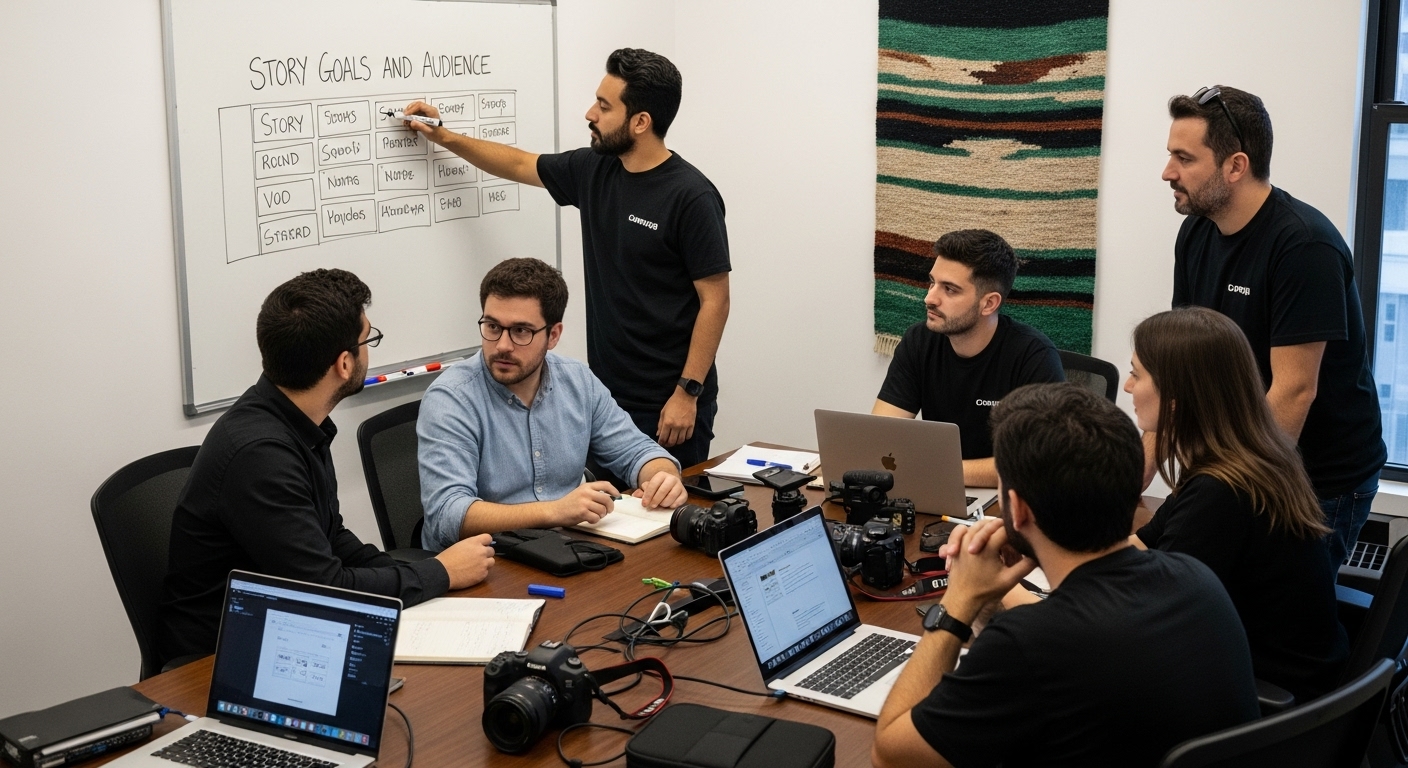
Successful video storytelling for NGOs begins with crystal clear strategic planning. Before you pick up a camera or start recording, you need to precisely understand what you want to achieve and who you want to reach. This foundational step determines the entire trajectory of your storytelling project.
Understanding your core objectives requires deep reflection about your NGO’s mission and the specific impact you want to create through visual storytelling. Are you aiming to raise awareness about a critical social issue? Do you want to inspire potential donors to support your work? Perhaps you need to communicate complex program outcomes to stakeholders and policymakers. Each goal demands a different narrative approach and visual strategy.
Identifying Your Target Audience
Your video’s effectiveness hinges on understanding your target audience at an intimate level. This means going beyond basic demographic information and developing a comprehensive audience persona. Consider their values, communication preferences, emotional triggers, and what motivates them to engage with social causes. A 25-year-old urban professional will likely respond differently to storytelling compared to a 50-year-old philanthropist or a government grant administrator.
Research from Stanford Social Innovation Review suggests that audience-centric narratives create deeper emotional connections. This means tailoring your visual storytelling not just to inform, but to genuinely resonate with viewers. Map out your audience’s potential emotional journey: What will make them feel compassionate? What narrative elements might inspire action?
Key audience considerations include:
Emotional engagement potential
Prior knowledge about your cause
Preferred communication channels
Potential barriers to understanding
By meticulously defining your story goals and target audience, you transform video storytelling from a generic communication tool into a precision instrument for social change. Your preparation sets the stage for creating compelling, meaningful visual narratives that can genuinely move hearts and inspire action.
Below is a checklist table to help ensure you don't miss any critical steps or considerations when planning and executing your NGO video storytelling project.
Checklist Item | Description | Completion Status |
Define story goals | Clarify the impact and objectives of your video | |
Identify target audience | Develop comprehensive audience persona and map emotional journey | |
Create narrative structure | Establish central character, challenge, and transformation | |
Plan visuals and audio | Develop storyboard, shot list, and select music and interview audio | |
Prepare for shooting | Organize equipment, permissions, and team roles | |
Capture authentic footage | Foster comfort and collect multiple takes for each key moment | |
Edit for emotional impact | Craft the narrative arc and ensure technical quality | |
Evaluate and share | Analyze metrics, gather feedback, and assess real-world outcomes |
Step 2: Craft a Compelling Narrative Structure
Building a powerful video storytelling framework requires more than just recording footage. Your narrative structure is the backbone that transforms raw information into an emotional journey that captures and maintains audience attention. Think of your story as a carefully constructed bridge connecting your NGO’s mission with viewers’ hearts and minds.
The most effective narratives follow a classic storytelling arc that resonates universally. This means developing a clear progression from introducing a challenge to showing meaningful transformation. Your story needs tension, human connection, and a sense of hope that motivates viewers to engage with your cause.
Building Your Narrative Blueprint
Start by identifying the core human experience at the center of your story. This isn’t about presenting statistics or dry program descriptions. It’s about revealing real human experiences that illuminate broader social issues. Select a protagonist whose journey exemplifies your NGO’s work. This could be an individual beneficiary, a community leader, or someone directly impacted by your organization’s interventions.
According to Stanford Social Innovation Review, compelling narratives require authenticity and emotional depth. Your story should reveal vulnerability, resilience, and genuine transformation. Avoid presenting subjects as passive recipients of aid. Instead, showcase their agency, strength, and active participation in creating change.
Key narrative development checkpoints include:
Establishing a clear central character
Presenting a meaningful challenge or conflict
Demonstrating personal or community growth
Connecting individual experience to broader systemic issues
Offering a sense of hope or potential for continued progress
A well-crafted narrative structure turns your video from a simple communication tool into a powerful mechanism for social engagement. By carefully constructing your story’s emotional architecture, you create an immersive experience that doesn’t just inform viewers but inspires them to think, feel, and potentially take action.
The table below summarizes key narrative development checkpoints to support planning and help ensure your video maintains a powerful structure throughout its storytelling journey.
Narrative Checkpoint | Purpose | Example Application |
Central character | Anchor story with relatable human experience | Feature a beneficiary impacted by your program |
Present challenge | Establish tension to drive story forward | Highlight a community's struggle with a social issue |
Demonstrate growth | Show transformation or progress | Reveal new opportunities or improvements due to NGO intervention |
Link to bigger issues | Connect personal story to systemic challenges | Illustrate how one program affects broader social change |
Offer hope/progress | Leave audience inspired to act | End on a note of empowerment and ongoing potential |
Step 3: Plan Your Visual and Audio Elements
Transforming your narrative into a powerful video requires meticulous planning of visual and audio components. These elements are the sensory conduits that will carry your story’s emotional weight, transforming abstract concepts into visceral experiences that resonate deeply with viewers.
Visual storytelling goes far beyond simply pointing a camera and recording. Each frame must be intentionally crafted to communicate your NGO’s message with precision and impact. This means carefully considering every visual element from camera angles and lighting to the specific locations and subjects you choose to represent your story.
Designing Your Visual Narrative
Begin by creating a detailed storyboard that maps out each significant moment in your video. Think of this as a visual script that outlines not just what will be shown, but how it will be shown. Consider the emotional journey you want to create through visual composition. Wide shots might communicate the scale of a community challenge, while intimate close-ups can reveal personal resilience and human connection.
According to Grand Valley State University’s Groundswell Stewardship Initiative, professional visual storytelling requires strategic planning. This means developing a comprehensive shot list that ensures you capture all necessary footage. Pay attention to technical details like using a tripod for stable shots, understanding lighting conditions, and selecting camera angles that amplify emotional impact.
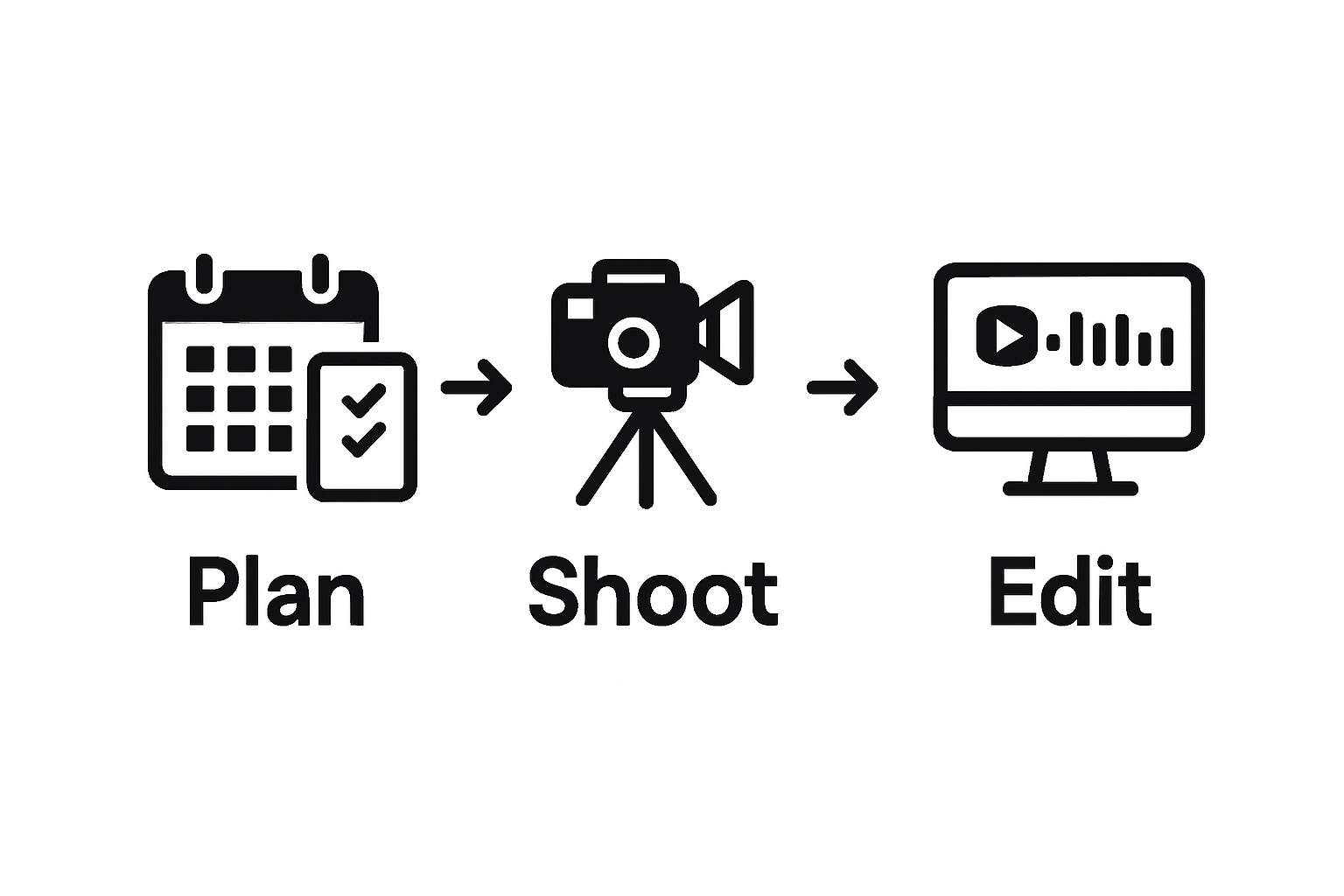
Key visual planning considerations include:
Selecting locations that authentically represent your story
Choosing subjects who can communicate genuine emotion
Planning camera movements that enhance narrative flow
Ensuring technical consistency across different shooting environments
Audio elements are equally crucial in creating an immersive storytelling experience. Your soundtrack, ambient sounds, and interview audio should work harmoniously to support the visual narrative. Carefully selected music can underscore emotional moments, while clean, clear interview audio ensures that personal stories are heard with clarity and depth. By meticulously planning both visual and audio components, you transform your video from a simple recording into a powerful storytelling instrument that can inspire genuine understanding and action.
Step 4: Execute the Video Shoot with Precision
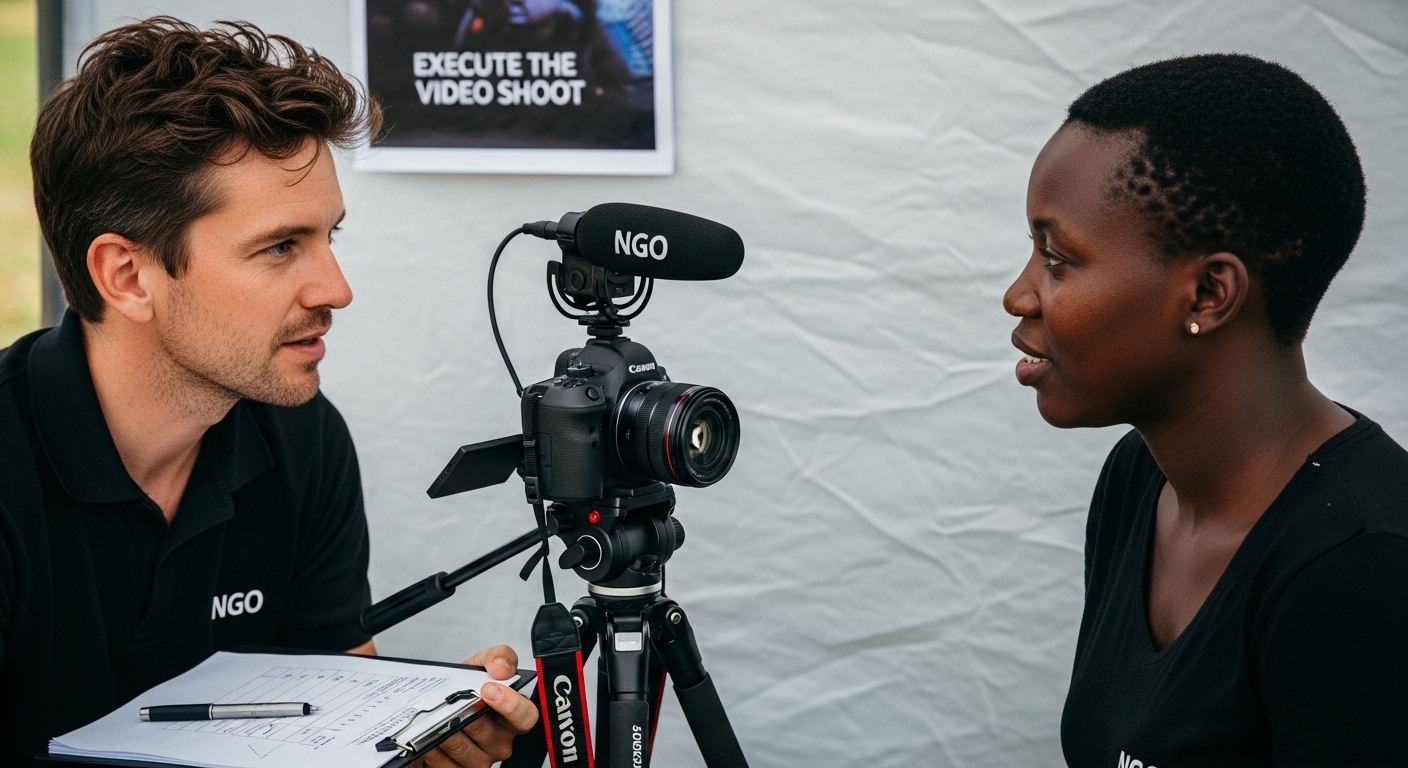
The moment of execution is where your carefully crafted narrative transforms from concept to reality. Video storytelling for NGOs demands a blend of technical skill, emotional intelligence, and strategic planning. Every second of filming is an opportunity to capture authentic, powerful moments that can inspire social change.
Prepare your team and equipment with military-like precision. This means arriving at locations early, conducting comprehensive equipment checks, and ensuring every team member understands their specific role. Your shoot’s success depends on seamless coordination and adaptability.
Capturing Authentic Moments
During interviews and scene captures, create an environment of genuine comfort and trust. Subjects must feel safe and respected, not like specimens being examined. This means using a gentle, conversational approach that allows authentic emotions to emerge naturally. Position your camera to capture subtle facial expressions and body language that reveal deeper emotional truths.
According to Grand Valley State University’s Groundswell Stewardship Initiative, professional video storytelling requires a strategic approach to shooting. This includes creating a comprehensive shot list that allows flexibility in capturing scenes out of sequence while maintaining your narrative’s integrity. Use a tripod to ensure stable, professional-quality footage and hold each shot for at least 10 seconds to provide robust editing options.
Critical shooting considerations include:
Maintaining consistent lighting across different scenes
Capturing high-quality, clear audio
Ensuring subjects feel comfortable and authentic
Collecting multiple takes of key scenes
Documenting location and subject release permissions
Remember that technical perfection serves your story, not the other way around. While professional quality matters, the emotional authenticity of your footage is paramount. By combining meticulous preparation with genuine human connection, you’ll create video content that doesn’t just inform but truly moves people to understand and engage with your NGO’s mission.
Step 5: Edit and Enhance Your Video Content
Editing transforms raw footage into a compelling narrative that resonates with your audience. This critical stage is where your video storytelling truly comes to life, blending technical precision with emotional intelligence. The editing process is not just about cutting and arranging clips, but about crafting a cohesive, impactful message that moves viewers.
Begin by reviewing all your captured footage with a critical eye. Watch everything multiple times, identifying the most powerful moments that authentically represent your narrative. Look for subtle facial expressions, genuine emotional shifts, and scenes that communicate your NGO’s core message with clarity and depth.
Crafting the Narrative Arc
Your editing process should focus on creating a seamless emotional journey. This means carefully selecting clips that build tension, reveal vulnerability, and ultimately showcase transformation. Pay close attention to pacing - your video should breathe, allowing viewers moments of reflection while maintaining a compelling rhythm. Use transitions that feel natural and purposeful, avoiding unnecessarily flashy effects that might distract from your story.
According to The European School Education Platform, effective video editing requires a strategic approach. Consider using professional editing software that offers robust tools for color correction, audio enhancement, and precise clip management. If you’re new to video editing, invest time in learning basic techniques or consider working with a professional editor who understands nonprofit storytelling.
Critical editing considerations include:
Maintaining narrative coherence
Balancing emotional intensity
Ensuring technical audio and visual quality
Trimming unnecessary footage
Adding subtle but meaningful graphics or text overlays
For those looking to dive deeper into professional video production techniques, explore our comprehensive video production guide for additional insights. Remember that great editing is an art form that requires patience, creativity, and a deep understanding of storytelling. Your final edit should not just inform, but inspire viewers to connect emotionally with your NGO’s mission.
Step 6: Share and Evaluate Your Video’s Impact
Your video’s journey doesn’t end with editing. Sharing and understanding its impact is crucial for transforming creative effort into meaningful social change. This final step determines whether your storytelling truly resonates with your intended audience and drives the action your NGO seeks.
Begin by strategically selecting distribution channels that align with your target audience’s digital habits. This might include social media platforms, specialized nonprofit networks, email campaigns, and targeted website embeddings. Each platform offers unique engagement opportunities and requires tailored presentation strategies.
Measuring Meaningful Engagement
Measuring impact goes far beyond simple view counts. Successful video storytelling creates tangible shifts in audience understanding, emotion, and potential action. Develop a comprehensive evaluation framework that tracks multiple engagement metrics. This includes view duration, sharing rates, comment sentiment, website traffic generated, and most critically, actual behavioral changes or support actions triggered by your video.
According to National Endowment for the Arts, integrating storytelling with rigorous evaluation helps NGOs communicate their work’s genuine value. Use analytics tools to gather quantitative data, but supplement these with qualitative feedback. Conduct surveys, host discussion groups, and directly engage viewers to understand the deeper emotional and intellectual impact of your narrative.
Key impact evaluation strategies include:
Tracking audience engagement across different platforms
Collecting viewer testimonials and stories
Monitoring direct actions like donations or volunteer sign-ups
Analyzing demographic reach and viewer demographics
Assessing long-term attitude and behavior changes
For organizations seeking to elevate their video storytelling capabilities, explore our comprehensive video production guide for advanced insights. Remember that impact measurement is an ongoing process. Each video is an opportunity to learn, refine your approach, and create increasingly powerful narratives that drive genuine social transformation.
Ready To Bring Your NGO’s Story to Life?
If you feel overwhelmed with the challenge of turning heartfelt stories into videos that stand out and inspire real action, you are not alone. The article laid out how crucial it is to transform abstract ideas into visual magic. From defining your audience to editing for emotional impact, the process can feel daunting when your team already has limited time. But what if you could rely on proven experts to help you craft a compelling narrative and deliver professional results, every time?

Let Tulip Films help you turn your NGO’s mission into a powerful visual story that reaches hearts and drives support. Explore our portfolio of moving video projects to see how other Swiss organizations have elevated their message with expert storytelling. Ready to connect with viewers and grow your impact right away? Book a free consultation today or visit our home page at www.tulipfilms.ch to discover how we can tailor every step of your video journey to your cause.
Frequently Asked Questions
What are the first steps to take when creating video content for my NGO?
Before filming, define your story goals and audience. Understand the impact you want to achieve and the specific audience you want to reach. Consider their values and what motivates them to engage with social causes.
How do I structure an effective narrative for my video?
An effective narrative follows a classic storytelling arc: introduce a challenge, develop tension, and showcase transformation. Focus on a central character whose journey exemplifies your NGO’s mission, and emphasize authenticity and emotional depth throughout the story.
What should I consider when planning visual and audio elements for my video?
Create a detailed storyboard and shot list to guide your visual narrative. Ensure your visuals communicate your message effectively. Pay attention to lighting and camera angles, and prioritize high-quality audio to enhance the emotional impact of your story.
How can I measure the impact of my video storytelling?
Measure impact using various engagement metrics beyond view counts, such as view duration, sharing rates, and behavioral changes like donations. Gather qualitative feedback through surveys and discussions to understand the emotional and intellectual effects of your video on the audience.
Recommended
