Branding with Video Step by Step: Elevate Your Swiss Brand


Nearly 90 percent of brands say video helps drive user engagement and growth. In an online world where attention spans are short, Swiss businesses face pressure to craft video content that actually connects with viewers. A clear process can transform scattered ideas into videos that build loyalty and trust. This guide reveals how Swiss companies can define their brand message, understand their target audience, and develop a video branding strategy that stands out.
Table of Contents
Quick Summary
Key Point | Explanation |
1. Define brand message and audience | Clearly outline your brand’s unique value and the audience you plan to reach for effective video branding. |
2. Align video content with business goals | Connect specific video types to your business objectives to ensure content serves a purpose, such as increasing leads. |
3. Create a storyboard and script | Develop a visual layout and a narrative that conveys your brand message while engaging your audience emotionally. |
4. Use high-quality production techniques | Invest in professional equipment and strategies to enhance the quality of your video and ensure it resonates with viewers. |
5. Analyze video performance regularly | Monitor key metrics to refine your video strategies continuously and adapt to audience engagement patterns. |
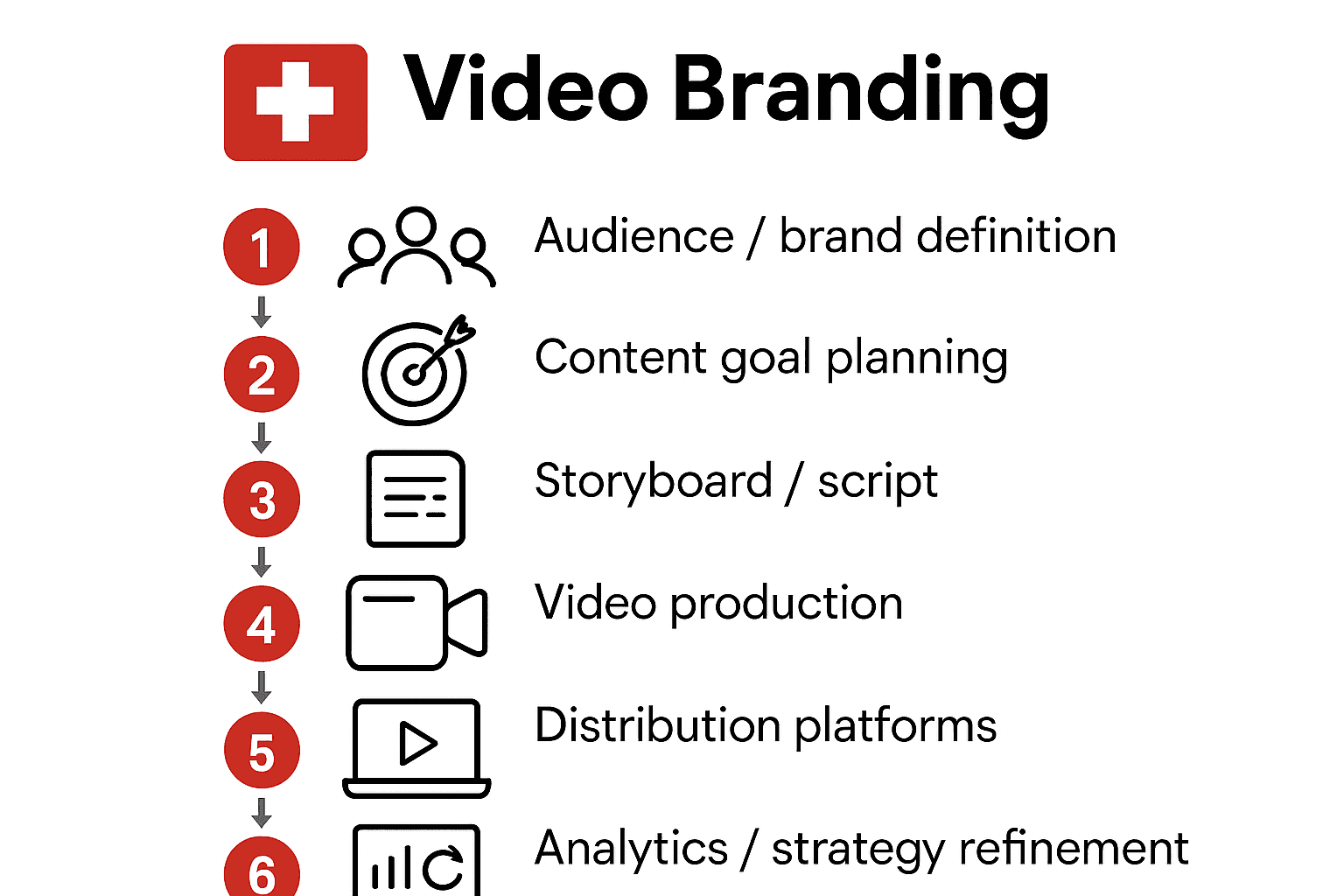
Step 1: Define brand message and target audience
Defining your brand message and target audience is the strategic foundation of effective video branding. This critical first step determines how your visual storytelling will connect with potential customers and communicate your unique value proposition.
According to Newcastle University, understanding your primary audience helps determine the information shared and the tone adopted. Start by creating detailed audience personas that map out demographic details like age, professional background, interests, and challenges. Ask yourself key questions: Who needs your product or service? What problems do they face? What motivates their decision making?
Your brand message should clearly articulate what makes your Swiss business unique. Consider crafting a concise statement that explains your core value proposition. For video content, this means distilling your brand’s essence into a narrative that resonates emotionally and intellectually with your target audience. As University of York emphasizes, tailoring content to audience expectations is crucial.
Pro Tip: Create a one page document that outlines your target audience characteristics and your brand message. This will serve as a strategic reference point for all future video content development.
With your brand message and target audience defined, you are now ready to move into conceptualizing your video branding strategy. The next step will focus on translating these foundational insights into compelling visual storytelling.
Step 2: Plan video content tailored to business goals
Planning video content that aligns with your business goals transforms your brand storytelling from generic visuals to strategic communication. This step bridges your defined brand message with purposeful video strategy that drives meaningful engagement.
According to UCSF School of Pharmacy, effective content messaging requires identifying specific audience segments and crafting targeted communication points. Begin by mapping your business objectives to specific video content types. Are you seeking to increase brand awareness? Generate leads? Demonstrate product functionality? Each goal demands a unique video approach.
Consider creating a content matrix that matches business objectives with video formats. For Swiss businesses, this might include corporate profile videos showcasing company culture, product demonstration clips highlighting technical expertise, or customer testimonial narratives that build trust. Break down your primary business goals into measurable outcomes you want each video to achieve.

Pro Tip: Develop a simple spreadsheet tracking each planned video project with columns for business objective, target audience, video type, key message, and success metrics. This strategic document will help maintain focus and allow clear performance evaluation.
Understanding Video Content Strategy can provide additional insights into developing a comprehensive approach. As you finalize your content plan, prepare to move into the next critical phase of scripting and creative conceptualization.
Step 3: Storyboard and script compelling visuals
Storyboarding and scripting are the creative blueprints that transform your business goals into powerful visual narratives. This crucial step bridges strategic planning with creative execution, turning your brand message into an engaging video experience.
According to Newbold College, understanding your target audience is fundamental to effective communication. Begin by breaking down your storyboard into key scenes that directly address your audience’s interests, challenges, and aspirations. Sketch out each major scene with simple drawings or digital mockups that illustrate the visual flow and key messaging points.
Your script should be a tight narrative that balances emotional resonance with clear communication. Focus on creating a story arc that connects your brand message to viewer experiences. Start with a compelling hook that grabs attention within the first few seconds, then progress through a clear structure introducing the problem, presenting your solution, and concluding with a strong call to action.
Pro Tip: Create a two column storyboard template with visuals on one side and corresponding script dialogue on the other. This approach helps ensure seamless alignment between what viewers see and hear.
Understanding the Role of Storytelling in Videos can provide additional insights into crafting compelling video narratives. As you complete your storyboard and script, you are now prepared to move into the production phase where your creative vision will come to life.
Step 4: Produce high-quality video using expert techniques
Producing a high-quality video transforms your strategic vision into a compelling visual narrative that captures your brand’s essence. This critical stage brings together technical expertise and creative storytelling to create a professional video that resonates with your target audience.
According to Heriot-Watt University, effective communication requires deep understanding of the audience’s communication environment. Begin by selecting professional equipment that matches your production needs. For Swiss businesses, this means investing in high-quality cameras, professional lighting, and clear audio recording equipment. Consider renting professional gear if purchasing is not feasible.
Bangor University’s research emphasizes the importance of targeted communication strategies. When shooting, focus on creating multiple takes of each scene to provide editing flexibility. Pay close attention to lighting, sound quality, and framing. Ensure your on camera talent understands the script and can deliver messages authentically and naturally.
Pro Tip: Create a detailed production checklist that includes equipment requirements, shooting schedule, backup plans for potential technical issues, and specific shots needed for your final video.
How to Produce a High Quality Business Video offers additional insights into professional video production. As you complete your video shoot, you are now ready to move into the critical post-production phase where raw footage will be transformed into a polished final product.
Step 5: Distribute videos across relevant platforms
Distributing your video content strategically transforms your creative work into a powerful marketing tool that reaches and engages your target audience. This critical step determines how effectively your brand message will connect with potential customers across different digital channels.
According to UCSF School of Pharmacy, understanding different audience segments is crucial for targeted messaging. Begin by mapping your video content to platforms where your specific audience spends time. For Swiss businesses, this might mean leveraging professional networks like LinkedIn for corporate content, Instagram for visually engaging brand stories, and YouTube for longer explanatory videos.
Consider a multi platform approach that maximizes your video’s reach. Optimize each platform upload with platform specific best practices. This includes creating platform tailored thumbnails, writing engaging descriptions, using relevant keywords, and understanding each platform’s ideal video length and format. Ensure your video maintains consistent branding while adapting to each platform’s unique audience expectations.
Pro Tip: Create a distribution matrix that tracks which platforms perform best for different types of video content. This will help you refine your strategy over time and allocate resources more effectively.
Understanding the Role of Video in Social Media Marketing can provide additional insights into effective video distribution strategies. As you complete your distribution plan, prepare to track and analyze your video performance to continually improve your brand’s video marketing approach.
Step 6: Monitor performance and refine strategy
Monitoring and refining your video marketing strategy transforms raw data into actionable insights that continuously improve your brand’s digital presence. This final step turns your video content into a dynamic tool for ongoing business growth and audience engagement.
According to UCSF School of Pharmacy, understanding different audience segments is key to effective messaging. Start by establishing clear performance metrics for each video across platforms. Track crucial indicators like view count, engagement rate, watch time, click through rates, and audience retention. Use platform specific analytics tools such as YouTube Analytics, LinkedIn Insights, and Instagram Metrics to gather comprehensive performance data.
Create a systematic approach to analyzing your video performance. Compare metrics across different videos and platforms to identify patterns. Which content types generate the most engagement? What time of day yields the best viewer response? Which audience segments interact most actively with your content? Use these insights to continuously refine your video strategy. Adjust your content style, posting schedule, and platform selection based on concrete performance data.
Pro Tip: Develop a monthly performance review spreadsheet that tracks key metrics, allowing you to visualize trends and make data driven decisions about your video marketing approach.
As you build your performance monitoring system, remember that video marketing is an iterative process of continuous learning and improvement. Stay flexible and be prepared to experiment with new approaches based on your analytical insights.
Elevate Your Swiss Brand with Expert Video Storytelling
Every Swiss business faces the challenge of turning a clear brand message and strategic goals into captivating visual stories that truly connect with their audience. As the article highlights, defining your target market and crafting compelling scripts is just the beginning. You need professional production and tailored distribution to make your brand stand out in a crowded digital landscape. At Tulip Films, we understand these challenges deeply and specialize in transforming your unique vision into high-quality videos that engage and inspire.
Take the next step to bring your brand narrative to life. Our personalized approach ensures your video content speaks directly to your audience’s needs and drives real results. Whether you want to boost brand awareness, generate leads, or demonstrate your products, our expert team is ready to deliver with speed and precision. Discover how our creative process aligns perfectly with your strategy by visiting Tulip Films and explore our portfolio of successful projects. Ready to make your brand unforgettable? Schedule your free consultation today to start crafting compelling video content tailored specifically to your Swiss business goals.
Capture your brand’s essence with professional video expertise by partnering with Tulip Films. Your story deserves to be told with clarity and impact.
Frequently Asked Questions
How do I define my brand message for video branding?
Defining your brand message involves clearly articulating what makes your business unique. Craft a concise statement that highlights your unique value proposition and resonates with your target audience. Write this down as a reference point for future video content.
What steps should I take to plan video content that meets my business goals?
Start by mapping your business objectives to specific video content types. Create a content matrix that matches each goal with an appropriate video format, such as product demos or customer testimonials, to ensure every video serves a purpose.
How can I create an engaging storyboard and script for my video?
Break down your storyboard into key scenes that target your audience’s interests and challenges. Create a two-column template with visuals on one side and scripts on the other to maintain a clear connection between what viewers see and hear.
What equipment do I need to produce high-quality video content?
Invest in professional equipment, like high-quality cameras and audio recording gear, to ensure your video’s production quality is top-notch. Create a detailed production checklist outlining all essential equipment requirements to stay organized during filming.
How do I effectively distribute my video across different platforms?
Map your video content to the platforms where your audience is active, tailoring the upload for each specific channel. Create a distribution matrix to track video performance and optimize your approach based on audience engagement metrics.
What metrics should I monitor to evaluate my video marketing performance?
Track key performance indicators like view count, engagement rate, and audience retention to assess how well your videos are performing.
Create a monthly review spreadsheet to visualize these metrics, allowing you to refine your strategy based on concrete data.
Recommended
